

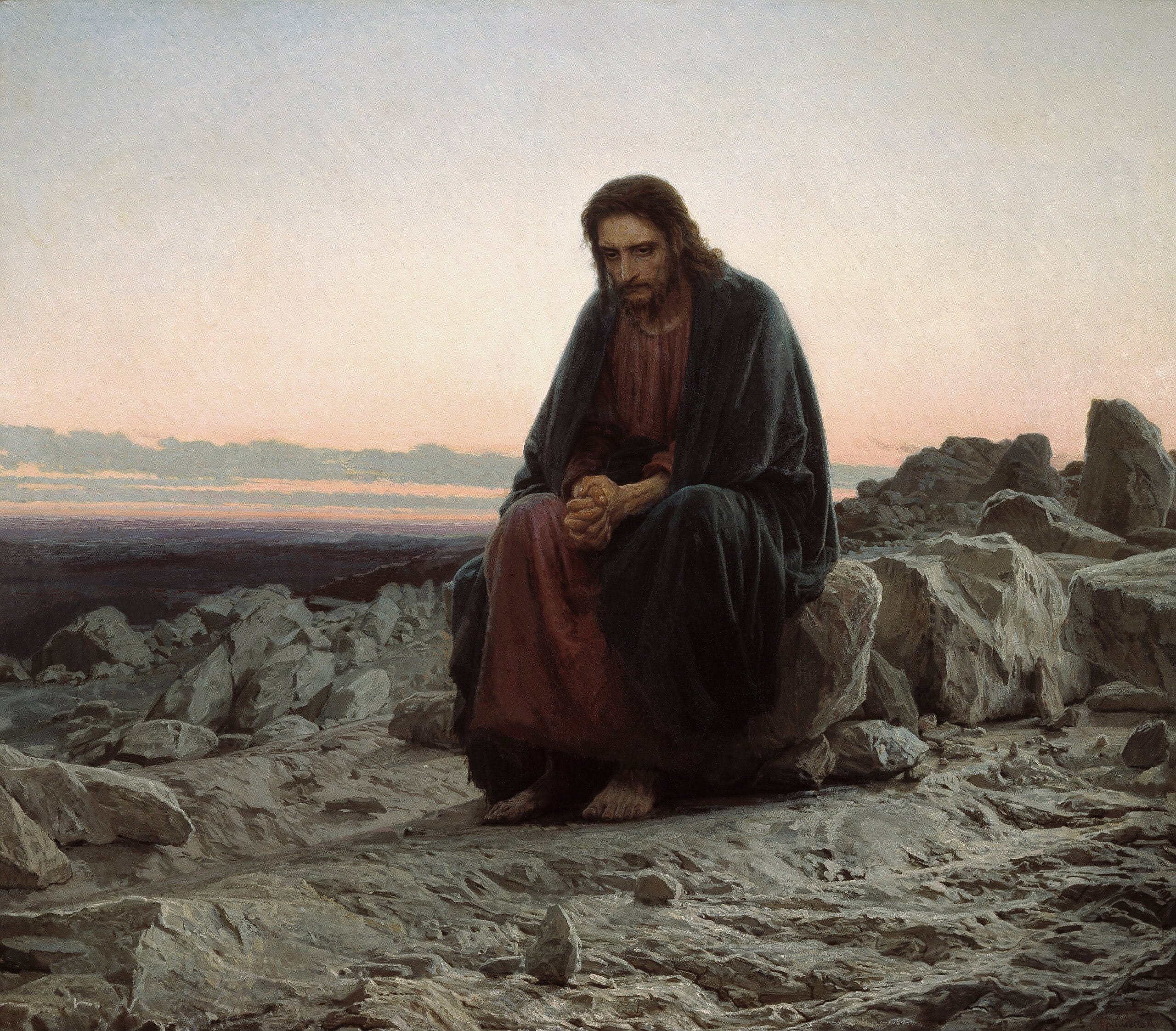
January 27, 2026 - “The People who Walked in Darkness”
I preached on Matthew 4 this past Sunday, so I’ll try not to repeat myself. I will add a link to that sermon here when it’s posted on Substack (likely tomorrow).
We probably all know Isaiah 9:6.
For to us a child is born, to us a son is given; and the government shall be upon his shoulder, and his name shall be called Wonderful Counselor, Mighty God, Everlasting Father, Prince of Peace (Isa 9:6, ESV).
This passage is among the most well-known verses in the Bible because of its association with Christmas. But what about Isaiah 9:1-2, which Matthew quotes here in chapter four?
It’s important to note that the Gospel of Mark, which Matthew uses as a source for his Gospel, has a parallel passage (Mark 1:14-15) for this section of Matthew’s Gospel, but he does not include the quotation from Isaiah. This is methodologically significant. When Matthew takes material from Mark and adds to it, we should pay close attention. These additions aren’t random - they highlight what Matthew wants to emphasize for his audience.1
The fact that Matthew interrupts Mark’s narrative flow to include this lengthy quote from Isaiah shows he wants his readers to view Jesus’s Galilean ministry through a prophetic perspective.
Here’s the passage from Isaiah.
But there will be no gloom for her who was in anguish. In the former time he brought into contempt the land of Zebulun and the land of Naphtali, but in the latter time he has made glorious the way of the sea, the land beyond the Jordan, Galilee of the nations. The people who walked in darkness have seen a great light; those who dwelt in a land of deep darkness, on them has light shone (Isa 9:1–2).
The contempt brought on the land refers to the Assyrian conquest of the northern kingdom in the 8th century BC. Zebulun and Naphtali were among the first territories to fall when the Assyrians invaded (2 Kings 15:29), and the region became known as “Galilee” - literally “the circuit” or “district” - a provincial designation that spoke of Israel’s subjugation to foreign powers. But God promises through the prophet that a day will come when God will make that same land glorious and replace its darkness with a great light. That light has come in the person of Jesus, who is now ministering in Galilee.
By quoting this passage from Isaiah, Matthew signals, as all the Evangelists do in many ways, that Israel’s exile was coming to an end in the ministry of Jesus. The region that was first to fall to foreign conquest and first to be exiled is now the first to see the great light. He is the light that shines in the darkness (it almost sounds exactly like John), and his very presence makes the place glorious.
The light that ended Israel’s exile still shines today. We, too, can find ourselves in dark places—seasons of spiritual dryness, times when God feels absent, and periods when we feel cut off from the life God promises. Matthew’s point is that Jesus’s very presence is what transforms darkness into light. We don’t need to wait for circumstances to change or for our spiritual state to improve. The light has already come. Christ’s presence in our lives means the exile is over, the darkness is broken, and the way to God is open. The question isn’t whether the light is shining—because it is. The real question is whether we’re walking in it.
This methodology is known as redaction criticism.