

Eunuchs and the Kingdom of Heaven (Feb. 11, 2026)
Jesus has just given a challenging teaching on marriage and divorce (Matt 19:3–9). The disciples’ reaction is revealing and somewhat unsettling.
The disciples said to him, “If such is the case of a man with his wife, it is better not to marry” (Matt 19:10).
Their reasoning reveals a deeply cynical perspective on marriage. They have become used to a culture where men can divorce their wives for minor reasons, leaving women vulnerable and abandoned. The concept of lifelong commitment is so unfamiliar, so restrictive, that they would prefer to avoid marriage altogether rather than accept such binding terms. Their complaint shows they view marriage mainly as an arrangement they can leave at any time.
Jesus doesn’t directly rebuke them but instead redefines the entire conversation. He talks about eunuchs.
But he said to them, “Not everyone can receive this saying, but only those to whom it is given. For there are eunuchs who have been so from birth, and there are eunuchs who have been made eunuchs by men, and there are eunuchs who have made themselves eunuchs for the sake of the kingdom of heaven. Let the one who is able to receive this receive it” (Matt 19:10–12).
In the ancient world, eunuchs held a complex social position. Deuteronomy 23:1 clearly excluded them from the Lord’s assembly. The law was straightforward.
No one whose testicles are crushed or whose male organ is cut off shall enter the assembly of the Lord.
But consider the context in Matthew 19. Earlier in this same conversation, Jesus explained that Moses allowed divorce “because of your hardness of heart, but from the beginning it was not so” (Matt. 19:8). If the permission for divorce was a concession to Israel’s spiritual state rather than God’s original plan, then some other laws, like the exclusion of eunuchs, might also have been accommodations that can be reconsidered.
The prophet Isaiah seems to think so.
Let not the foreigner who has joined himself to the Lord say, “The Lord will surely separate me from his people”; and let not the eunuch say, “Behold, I am a dry tree.” For thus says the Lord: “To the eunuchs who keep my Sabbaths, who choose the things that please me and hold fast my covenant, I will give in my house and within my walls a monument and a name better than sons and daughters; I will give them an everlasting name that shall not be cut off (Isa 56:3–5).
The eunuch is told not to say, “I am a dry tree” because God promises to give faithful eunuchs “a monument and a name better than sons and daughters.”1 What Moses excluded, Isaiah envisions God embracing.
Jesus takes this trajectory to its fulfillment. He identifies three categories of eunuchs, but the third is revolutionary. These are the “eunuchs” who have made themselves so for the sake of the kingdom of heaven. This phrase appears nowhere else in Scripture and is unique to Matthew’s Gospel. Jesus is not merely reversing an old exclusion or affirming a prophetic promise. He is reframing social categories entirely in terms of kingdom purpose. Voluntary celibacy becomes an honored vocation when undertaken for God’s reign. The kingdom does not simply tolerate those who cannot marry. The kingdom elevates renunciation itself to the level of devotion.
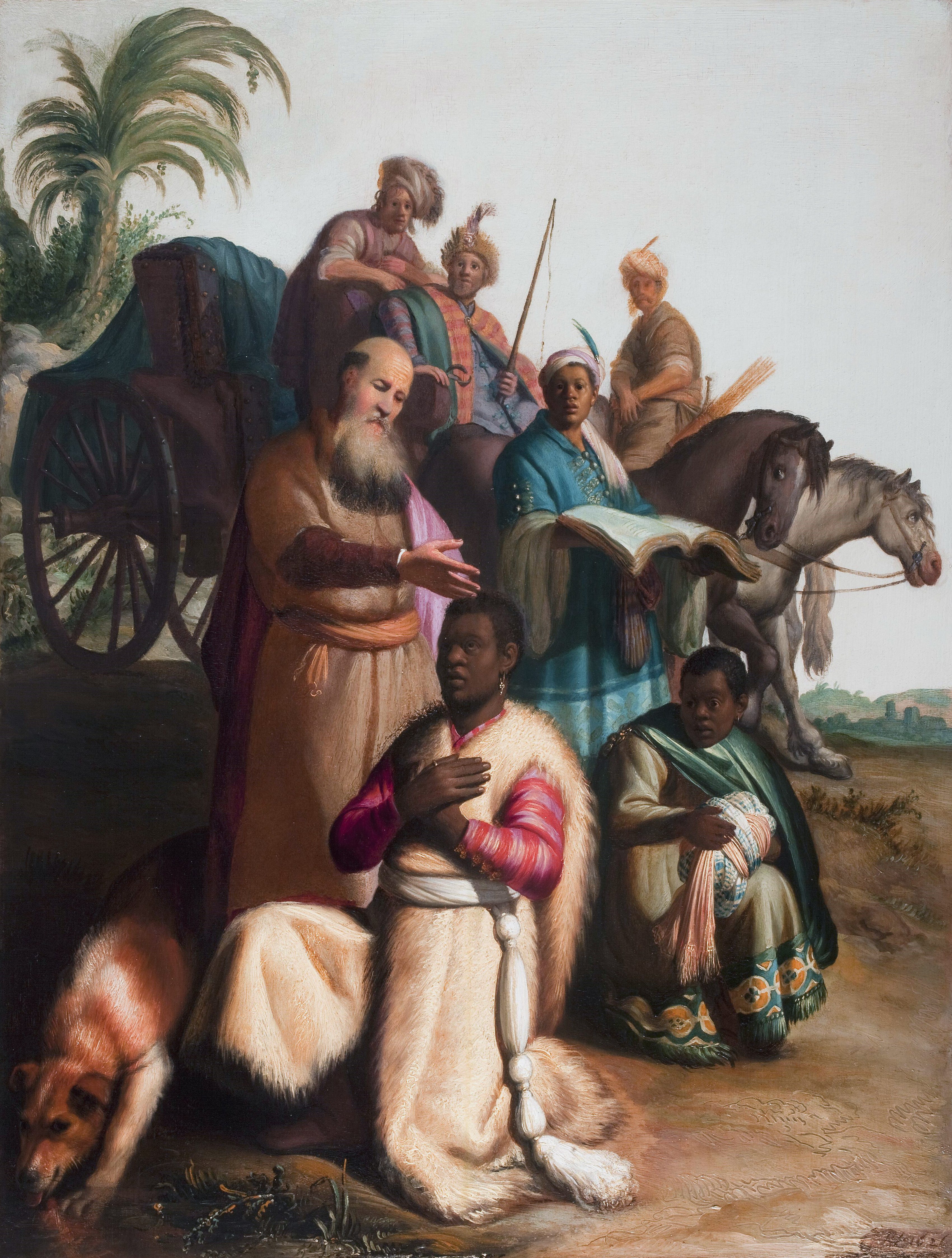
This teaching finds its narrative fulfillment in Acts 8:26–40, when Philip encounters an Ethiopian eunuch reading Isaiah. The man is baptized without hesitation. The one whom Deuteronomy excluded is welcomed into the messianic community. Isaiah’s promise of a name better than sons and daughters is realized in the name of Jesus.
Jesus concludes with a warning. Not everyone can receive this saying. But for those who can, the kingdom opens a path the world considers barren and finds it fruitful beyond measure.
The Hebrew word for “monument” is often used euphemistically. Isaiah is making a pun. Those who had lost their yad would be given a “monument” (yad) in the Temple to preserve their name.