

Whose Prayer Is This? The Lord’s Prayer as Theology
Confirmation Class: Lesson 7
There is a moment in the Anglican catechism that should stop the reader in their tracks. After walking through what Christians believe (the Apostles’ Creed) and how Christians should live (the Ten Commandments and the Lord’s Summary of the Law), the catechist addresses the catechumen directly and says something unexpected:
“My young friend, please understand this: that you are not able to do these things with your own strength, or to walk in the Commandments of God, and to serve him, without his special grace.”
Harsh, but the catechist does not stop there:
“So you must learn at all times to call for that grace through prayer. Let me hear, then, if you can say the Lord’s Prayer.”
This is one of the most honest sentences in Christian formation. We lack the ability to be the people we were created and redeemed to be. But this should not lead to despair. It should lead to reliance on grace. One of the primary ways Christians have sought that grace since the earliest days of the church is by praying the Lord’s Prayer, so that is where this lesson turns.
Whose Prayer Is This?
N.T. Wright makes a claim about the Lord’s Prayer that is easy to miss if you read it too quickly. He argues that this prayer is not a general prayer to a generalized divinity. It is not even a typical Jewish prayer, though almost every element in it can be matched to Jewish prayers of the period. It is, as he puts it, “Jesus-specific.”
He writes:
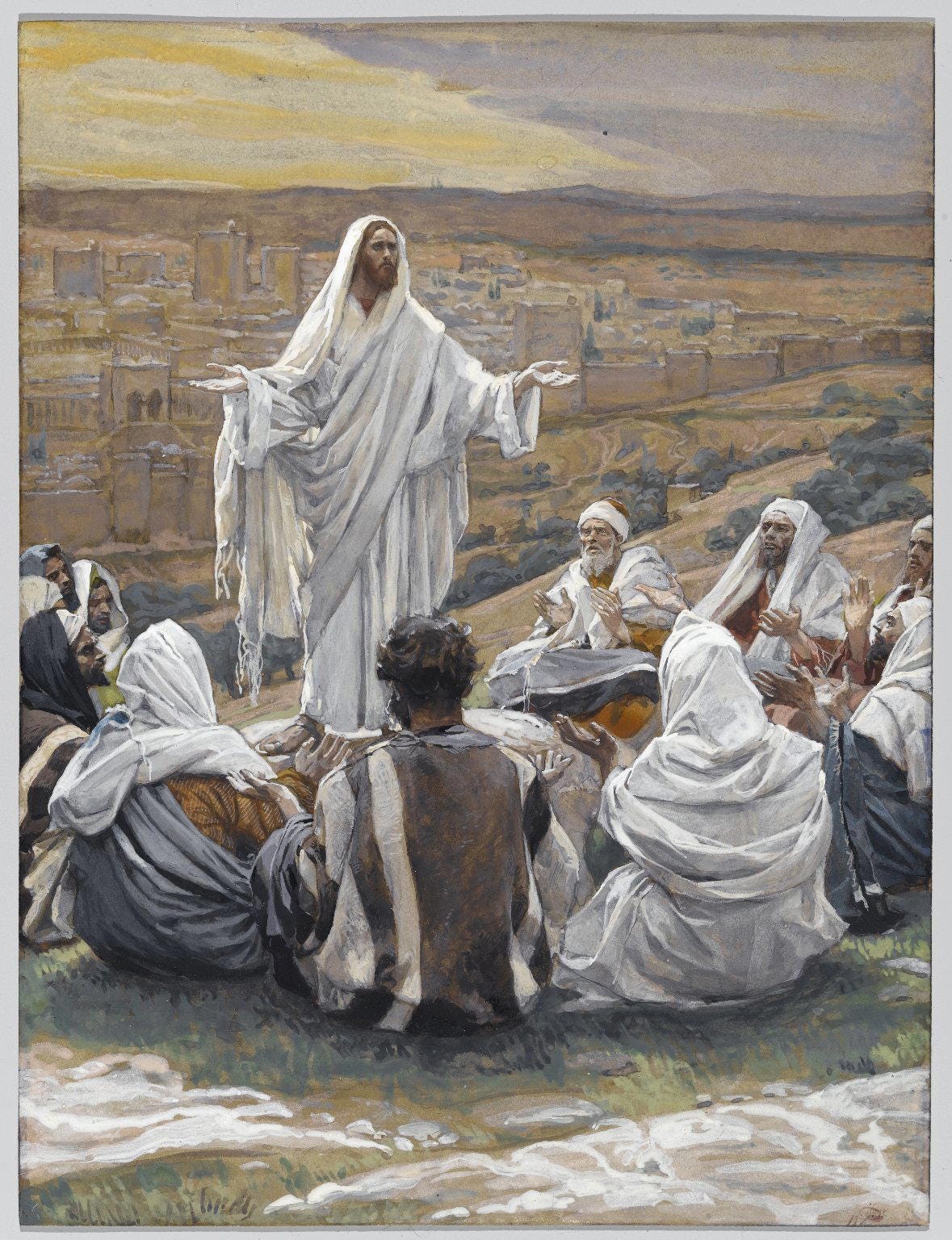
It was, after all, Jesus who was going around saying it was time for the Father’s name to be honored, for his kingdom to come on earth as in heaven. It was Jesus who fed the crowds with bread in the desert. It was Jesus who forgave sinners and told his followers to do the same. It was Jesus who walked, clear-eyed, into the “time of trial,” the great tribulation that was rushing like a tidal wave upon Israel and the world, so that by taking its full force on himself others might be spared it. And it was Jesus who was inaugurating God’s kingdom, exercising God’s power, and dying and rising to display God’s glory. The “Lord’s Prayer,” as we call it, grows directly out of what Jesus was doing in Galilee. And Gethsemane, too: the prayer looks directly forward to what he achieved in his death and resurrection.
To pray the Lord’s Prayer, then, is not merely to recite a formula. It is to align yourself with a person. It is to say: I want to be part of Jesus’s kingdom movement. I find myself drawn into his way of living, where heaven is breaking into earth. I need what he offers — bread, forgiveness, deliverance. And I intend to live as he lived, with forgiveness at the center of my dealings with others.
When you pray this prayer, you are not just talking to God. You are declaring whose side you are on.
Our Father
Two words. Enormous theology.
The instinct might be to say that God is Father because he created everything — and therefore we are all, in some sense, his children. That idea appears in certain strands of ancient thought. But that is not what the Lord’s Prayer means by “Father.”
The deeper logic runs through the Exodus. When God speaks to Pharaoh through Moses, he does not say “release my servants.” He says, “Let my son go” (Exod. 4:22). Israel is God’s firstborn son — called out of Egypt, into a covenant relationship, into a particular intimacy with the God who rules all things. Being God’s child is not a generic fact about all created humans; it is a declaration that you are one of the people God is redeeming, called out and called close.
What Jesus does, by teaching his disciples to say “our Father,” is to invite them into that same intimacy — and to extend it. Paul makes the mechanism explicit in Galatians 4:6: “because you are sons, God has sent the Spirit of his Son into our hearts, crying, ‘Abba! Father!’” Notice that Paul preserves the Aramaic word — the word Jesus himself would have used — even in a letter written to Greek-speaking Gentiles. That is not an accident. The Aramaic אַבָּא (ʾabbāʾ) sits untranslated in Galatians 4:6 because Paul expects his Gentile readers to recognize it. The most plausible reason they would recognize it is that they already knew it — not because they prayed in Aramaic, but because the Lord’s Prayer was known in the early church as the Abba prayer, the prayer Jesus gave his disciples in which they dared to address the God of the universe by his Son’s own intimate word for him.
The Spirit crying Abba in our hearts is the Spirit of the Son, and to be caught up in that cry is to be drawn into the very prayer life of Jesus. The Lord’s Prayer opens with Πάτερ ἡμῶν (Pater hēmōn) — “Our Father” — and in doing so presupposes exactly this intimacy: a relationship made possible only because the Spirit of the Son has been poured into our hearts, teaching us to address God as Jesus himself did.
“Who art in heaven” anchors the other half of the address. God is our Father — close, intimate, relational — but he is not immanent in the way pantheism imagines, dissolved into the fabric of the world, at one with the birds and the bees and the trees. Heaven is a distinct sphere of existence that overlaps with ours but is not identical to it. God is transcendent and personal at once, and the opening address of the Lord’s Prayer holds both without collapsing either.
Hallowed Be Thy Name
The goal of all creation, in the end, is the hallowing of God’s name. Isaiah’s seraphim say it plainly: “Holy, holy, holy is the Lord of hosts; the whole earth is full of his glory” (Isa. 6:3). That vision — the entire earth responding to the Creator in praise — is what we are praying for when we say “hallowed be thy name.” To hallow is to make sacred, to treat as holy, to give its proper respect. The prayer asks that God’s name be given that respect throughout the earth.
Which leads directly into the next petition.
Thy Kingdom Come, Thy Will Be Done
Hebrew parallelism involves restating an idea in different words. The Psalms do this constantly: the second line echoes and elaborates on the first. The Lord’s Prayer follows the same pattern. “Thy kingdom come” and “thy will be done on earth as it is in heaven” express the same idea twice — the kingdom of God is his rule and reign, and for that kingdom to come means his will is done.
Notice what this prayer is not saying. It is not saying “I can’t wait to die and join you in heaven.” The entire logic of the petition runs in the other direction: God’s kingdom is to come here, to earth, into the broken, painful, and unjust situations of actual human life. This prayer commits us to something. It commits us to being people who look at the hurt of the world — broken families, suffering bodies, social injustice, poverty, war — and say: God, I want you to bring your kingdom to this place.
And then, in the great pattern of Scripture, to become the means by which he does.
Give Us This Day Our Daily Bread
The word translated “daily” in the Lord’s Prayer is among the most notable in the New Testament. It is a hapax legomenon(ἅπαξ λεγόμενον, hapax legomenon) — a word that appears to have been created for this purpose, with no clear prior usage. The word is ἐπιούσιος (epiousios).
The compound breaks into two parts. The preposition ἐπί (epi) carries a range of meanings: above, beyond, concerning, or for the sake of. The second element derives from the participial form of εἰμί (eimi), the Greek verb to be — existence itself. Pressed together, epiousios opens onto several possibilities simultaneously.
It could mean “necessary bread” — the bread that sustains existence, what we need to survive. This reading is the most straightforward, and it is not wrong.
It could mean “bread above existence” — bread that transcends the merely physical. Given that Jesus speaks elsewhere of himself as the bread that came down from heaven (John 6), and given the centrality of the Eucharist in early Christian worship, this layer is hard to dismiss.
And ἐπί (epi) can mean “beyond” — pointing toward what comes after this age. The Old Testament prophets describe a great banquet on the mountain where death will be permanently swallowed up (Isa. 25:6–8). Second Temple Jewish writings frequently revisit that image: the messianic banquet, the feast at the end of the age, celebrating God’s final victory and the renewal of all creation. Epiousios may be reaching toward that as well: give us today the bread of the age to come.
All three meanings probably hold together. The word was likely chosen — or coined — precisely because it could carry all of them at once. And all three point to the same place: if God’s kingdom is to come on earth as it is in heaven, people need to be fed, physically and spiritually. The Lord’s Prayer commits us to that truth.
Forgive Us Our Trespasses
The two main versions of the Lord’s Prayer differ in wording here. Matthew 6:12 uses the language of “debts” (ὀφειλήματα, opheilēmata) and “debtors” (ὀφειλέταις, opheilētais). Luke 11:4 uses “sins” (ἁμαρτίας, hamartias) for our own failures but shifts to debt language (ὀφείλοντι, opheilonti) for those we are called to forgive. The traditional liturgical rendering — “trespasses” throughout — is a conflation that captures something real without being a direct translation of either Gospel.
The logic of this petition is best understood through the institution of the Jubilee. Every seventh year, the land of Israel was to lie fallow. And after seven cycles of seven years — forty-nine years in total — the fiftieth year was declared the Year of Jubilee (Lev. 25:8–11). All debts were canceled, all slaves were freed, and all land was returned to its ancestral family. The announcement was made on the Day of Atonement, when the high priest entered the Holy of Holies with the blood of sacrifice, and the horn was blown across the land.
When Jesus enters Nazareth at the start of his ministry, he opens the scroll of Isaiah and reads: “The Spirit of the Lord is upon me, because he has anointed me to proclaim good news to the poor... to proclaim the year of the Lord’s favor” (Luke 4:18–19; cf. Isa. 61:1–2). The year of the Lord’s favor is the Jubilee. Jesus declares that it has arrived.
The horizontal dimension — relating to others — is inseparable from the vertical. The basis on which we ask forgiveness from God is how much forgiveness we extend to others. This is not a comfortable claim. It is, in fact, one of the most demanding aspects of the prayer. Forgiveness ought to be the very breath of Christians. Christians should be the first to rejoice when debts are canceled, when those burdened by poverty or failure are given a new beginning. If we find ourselves hesitant to forgive — whether a person, a community, or anyone — the prayer reveals us: we are people who have forgotten how much we ourselves have been forgiven.
Lead Us Not Into Temptation
This line is frequently misread as a request that God not lure us into moral failure — as if the petition imagines God tempting us with sin and we are asking him to stop. That is not what the Greek says, nor what Jesus meant.
The Greek word is πειρασμός (peirasmos). It can carry the meaning of temptation, but in the Gospels, πειρασμός most often refers to a time of intense testing or tribulation bearing down upon the world. It is the trial Jesus himself endured — the great confrontation with darkness, the agony of Gethsemane, the cross. The prayer asks that God not bring us into that kind of ordeal: “do not bring us to the time of trial.”
Jesus prays this same logic in Gethsemane: “not my will, but yours be done” (Mark 14:36). He is the one who walked into the peirasmos so that his disciples might be spared from it. The plea embedded in the Lord’s Prayer is a plea shaped by the cross.
Deliver Us From Evil
Or, more precisely: deliver us from “the” evil one. The Greek phrase is ἀπὸ τοῦ πονηροῦ (apo tou ponērou) — the definite article τοῦ (tou) makes it specific, pointing not merely to an abstract quality of evil but to a personal agent. There are real, malevolent forces at work in the world. At confirmation, candidates are asked: “Do you renounce the devil and all his works?” The question is not rhetorical. It is asked because the answer matters.
The Concluding Doxology
The prayer does not end in defeat. It concludes with the doxology — “for thine is the kingdom, and the power, and the glory, forever and ever” — which, though absent from the earliest manuscripts, was almost certainly added early in Christian liturgical practice because it was unthinkable that a Jewish prayer would end without an ascription of praise. It sums up what the entire prayer has been building toward: all authority, all power, all glory belong to God. There is no other. That is not a pious sentiment tacked on at the end. It is the theological assertion that makes everything else in the prayer possible.