

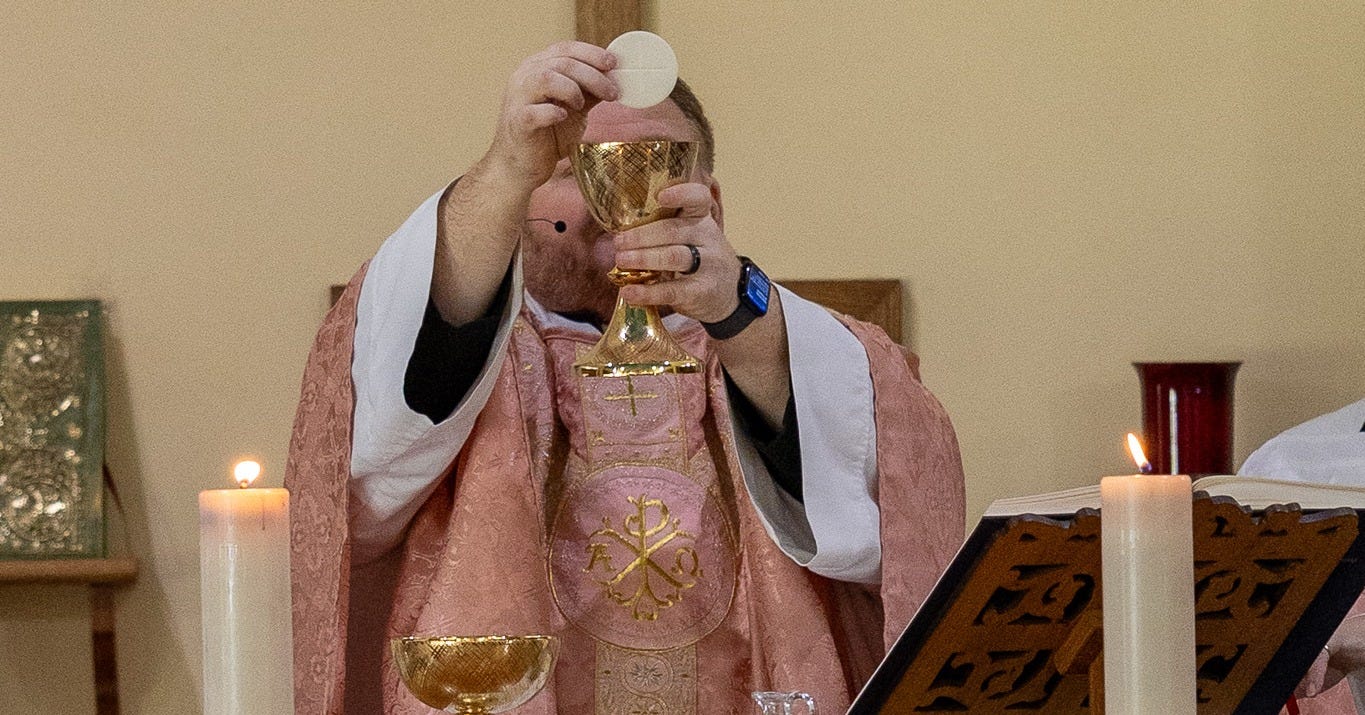
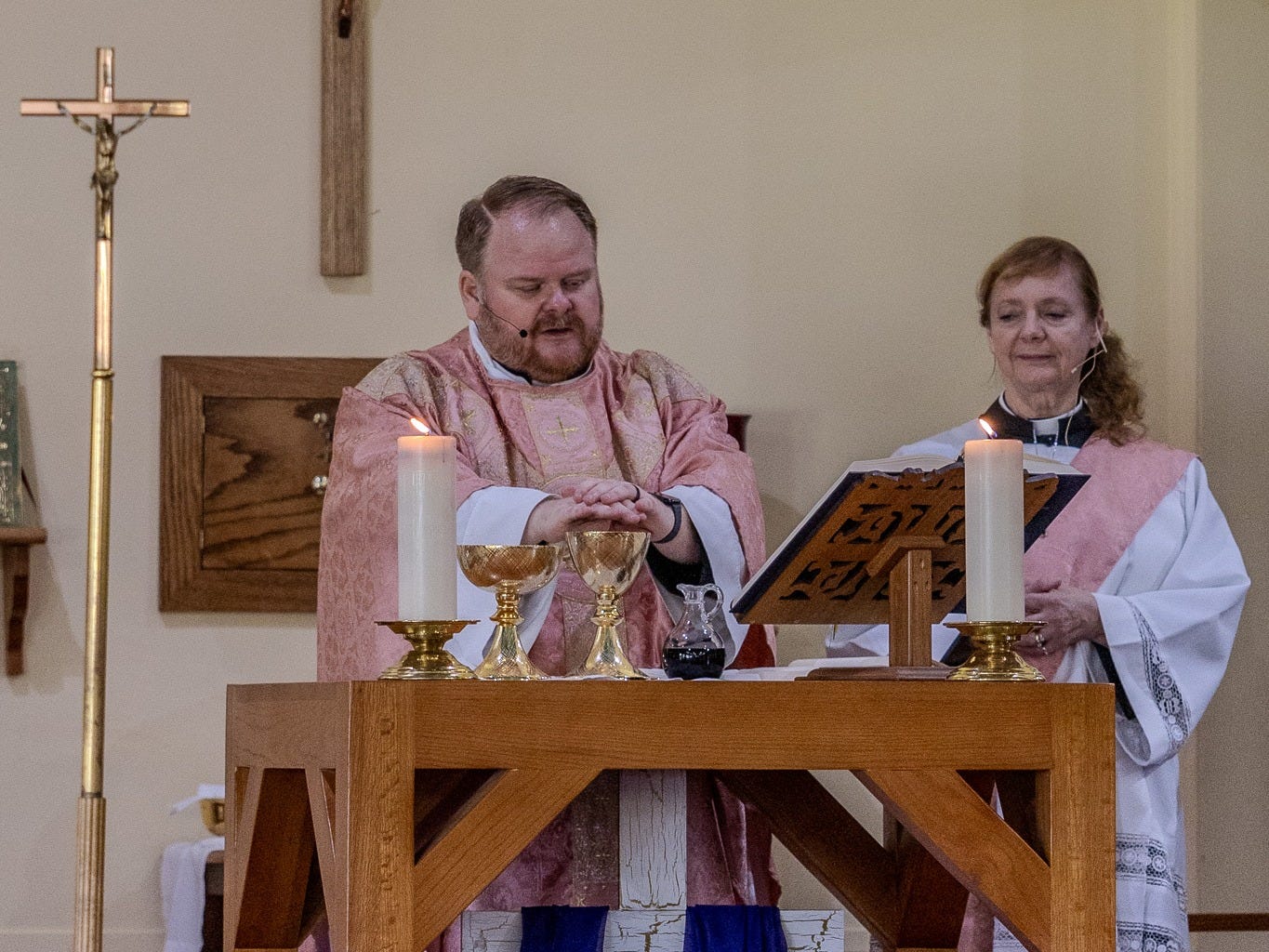
Twice a year, if you attend a church that follows the ancient liturgical calendar, you might notice something unusual: the priest enters wearing vestments that closely resemble pink. There might be a special announcement about the color, or there might not be. The service continues as usual. But something has shifted, and the color of the vestments is the key clue.
These two Sundays are Gaudete Sunday (the third Sunday of Advent) and Laetare Sunday (the fourth Sunday of Lent). Each gets its name from the Latin word that begins its traditional entrance antiphon. Gaudete comes from gaudere, meaning to rejoice or be glad; laetare from laetari, meaning to be glad or to exult. If there’s a difference in tone, it’s that gaudere suggests inward, felt joy, while laetari leans toward outward exultation. Both are imperatives and essentially mean the same thing: rejoice. Recognizing why the church pauses to emphasize this command amid two penitential seasons offers insight into the deeper logic of Christian worship.
A Rose by Any Other Name
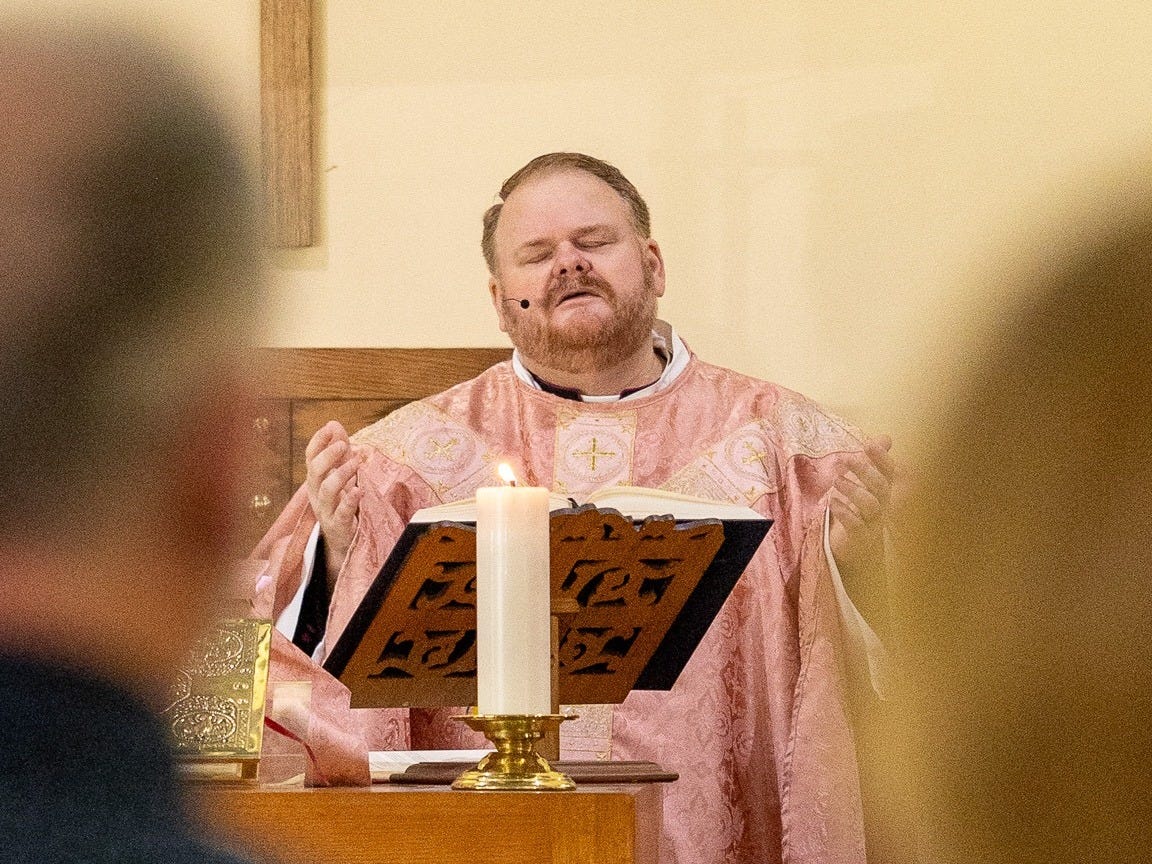
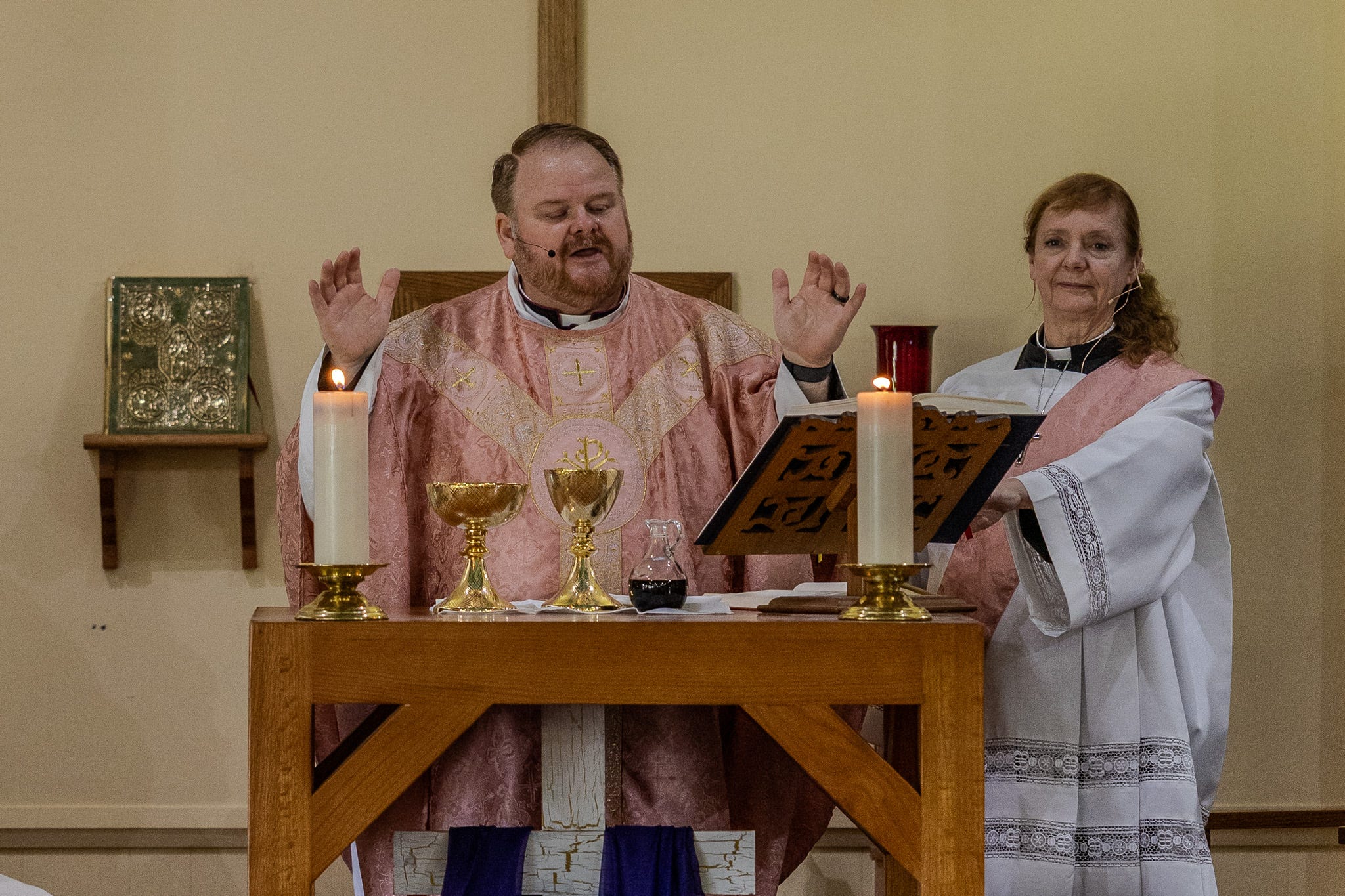
The liturgical color is technically called rose, not pink, although the difference matters less than what the color signifies. Advent and Lent are both seasons of preparation and self-examination. The color traditionally used for Lent is purple or violet, a hue historically associated with penitence and mourning. Many Anglican parishes, including St. Dunstan’s, follow the older Sarum tradition and wear blue for Advent instead of purple, a practice rooted in the pre-Reformation liturgical use of Salisbury Cathedral.1
The distinction is theologically fitting: Advent is primarily a season of anticipation, not penitence, and blue symbolizes hope and expectation rather than mourning. Rose is meant to soften the tone of these two seasons. The new color doesn’t detach from the season’s character; it modifies it. The effect, if you notice it, is like a window shade being raised halfway—not fully open, but enough to let in the light.
The practical reason for wearing different shades of vestments on these two Sundays is that they serve as intentional breaks from the penitential tone. However, the deeper theological reason remains the same for both Sundays.
Gaudete: Rejoice in Advent
The Third Sunday of Advent is named after the opening word of its traditional Introit, which is taken from the apostle Paul’s letter to the Philippians.
Rejoice in the Lord always; again I will say, rejoice. Let your reasonableness be known to everyone. The Lord is at hand. (Phil 4:4–5 ESV).
The command is not gentle encouragement. Paul gives it in the present tense, twice in a row, and then provides the reason with a phrase that carries great weight. His Greek is brief: ὁ κύριος ἐγγύς, the Lord is near.
In its original setting, Paul writes from prison. The community he addresses faces genuine hardship. The command to rejoice is not naive optimism; it is an act of theological rebellion against present circumstances rooted in a conviction about what has already occurred and what is about to happen. The Lord is near because the Lord has come, and the Lord who has come will come again.
That double horizon, the first coming and the second, is exactly what Advent encompasses. The season isn’t just a countdown to Christmas. Advent is the church’s yearly reflection on human longing, on creation’s groaning for redemption, and on the confident expectation of the One who said he would return. Gaudete Sunday, which arrives halfway through Advent, announces that the waiting is nearly over. The liturgical color of Advent does not disappear; it is lightened. The season of longing has not ended. But joy has started to leak through.
Laetare: Rejoice in Lent
The Fourth Sunday of Lent also gets its name from the opening word of its traditional Introit, taken from the prophet Isaiah.
Rejoice with Jerusalem, and be glad for her, all you who love her; rejoice with her in joy, all you who mourn over her; that you may nurse and be satisfied from her consoling breast; that you may drink deeply with delight from her glorious abundance (Isa 66:10–11).
The command is directed to all who love Jerusalem and everyone who mourns for her. These two groups are not enemies but allies, the same people who carry both grief and hope at the same time.
What is often overlooked is where this text fits within the larger canon. Isaiah 66 is the final chapter of the book, representing the last word of the longest of the prophets. The preceding chapters are filled with imagery of exile, judgment, and the suffering of a people who have seen everything they cherished reduced to ruins. Israel has been unfaithful; the temple has been destroyed; the city lies in desolation.
But Isaiah does not end with despair. The final chapters of the book showcase one of the most breathtaking eschatological visions in all of Scripture: a new creation, a renewed Jerusalem—a city no longer defined by mourning and exile but by nursing mothers and overflowing abundance. The image of Jerusalem as a mother who satisfies and comforts her children is not sentimental; it is the prophet’s ultimate response to the long suffering of exile, a vision of what God’s faithfulness truly looks like when fully realized.
The choice of this text for Laetare Sunday is not accidental. Lent functions like a season of exile, a time of facing sin, mortality, and the gap between who we are and who we were created to be. “From dust you came, and to dust you shall return.” The liturgy doesn’t soften that truth. But Lent doesn’t end in dust. It concludes at an empty tomb, and the entire penitential season points toward Easter, just as Isaiah’s prophecy points toward restoration. What the prophet sees from the far side of exile, the church sees from the far side of Good Friday. And Laetare Sunday arrives at the midpoint of Lent to remind us: what is coming is close enough to feel.
The rose vestments do not indicate that Lent has ended any more than Gaudete signals the end of Advent. They show that what comes next is already on its way.
Two Commands, One Logic
Gaudete and Laetare are more than liturgical curiosities. They represent a fundamental belief in historic Christian worship: joy is not the opposite of penitence or longing but its fulfillment. The church does not ask its members to suppress grief or ignore the heaviness of human life. The purple of Advent and the sarum blue of Lent honestly acknowledge both. But the church also refuses to let its followers forget what all that longing and repentance are ultimately for.
The theological term for this kind of anticipatory joy is prolepsis, which means experiencing a future reality as if it were already present. Both rose Sundays are proleptic moments. The church looks ahead, embraces the joy of Christmas and Easter before they arrive, and allows that joy to break through the penitential tone of the season. But prolepsis is not wishful thinking. It is based on a specific claim about history: that the resurrection of Jesus has already occurred, that death has already been defeated, and that the future God promised is not just coming but has already broken into the present. The joy of Gaudete and Laetare is not the joy of people who hope things will turn out well. It is the joy of people who have been told, and who believe, that things are already turning out well.
This proleptic character also explains why the commands are given in the imperative. “Rejoice.” “Be glad.” The church is not simply reporting an emotion and inviting others to share in it. Instead, the church is commanding its members to adopt a posture—a way of standing in the present moment, grounded in what God has already done and what He has promised. Paul could give that command from a prison cell, not because his circumstances were good, but because the Lord was near. Isaiah could sing about nursing mothers and overflowing abundance, not because exile was comfortable, but because he had seen what lay beyond it.
The vestments serve the same purpose. The rose vestments don’t match the mood of most people filing into a pew on an ordinary Sunday in November or (often) March. But liturgy isn’t meant to match the mood; it’s meant to shape it. The rose signifies: We are people who know how the story ends. And because we know the ending, we can rejoice, even now, even here, even in the middle, because the ending is breaking into our present.
I recognize this is disputed.