

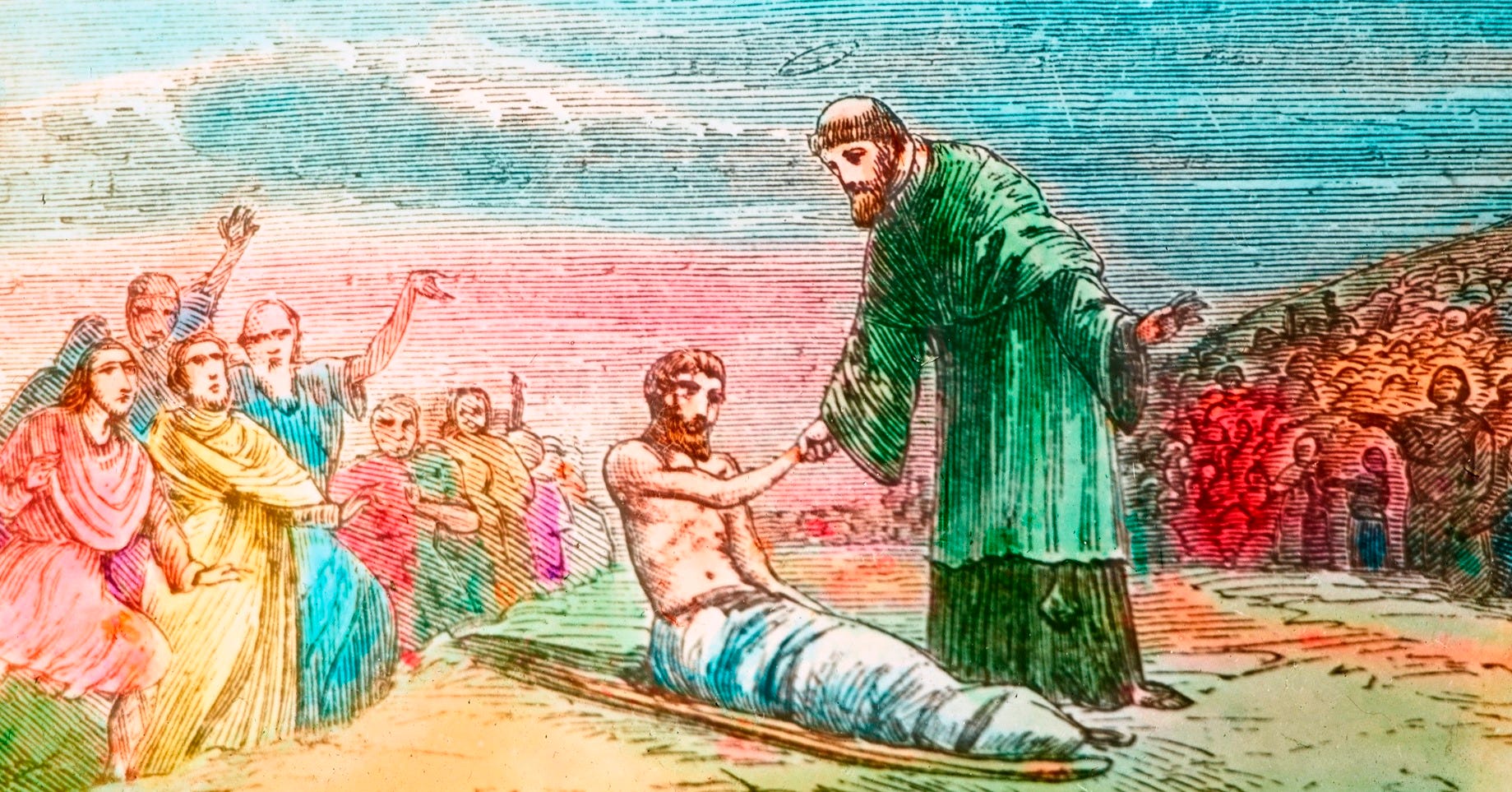
Today is St. Patrick’s Day — and, not incidentally, my mother’s birthday. Happy birthday, Mom.
The day has become, in American culture, an occasion for green beer and plastic shamrocks, which is a shame because the man behind the holiday is genuinely one of the most remarkable figures in the history of the Christian church. Patrick was not Irish. He did not drive snakes out of Ireland. And whatever he may or may not have done with a shamrock, the legend obscures a life far more interesting than the mythology. The real Patrick deserves to be rescued from the holiday that bears his name.
A Slave Who Came Back
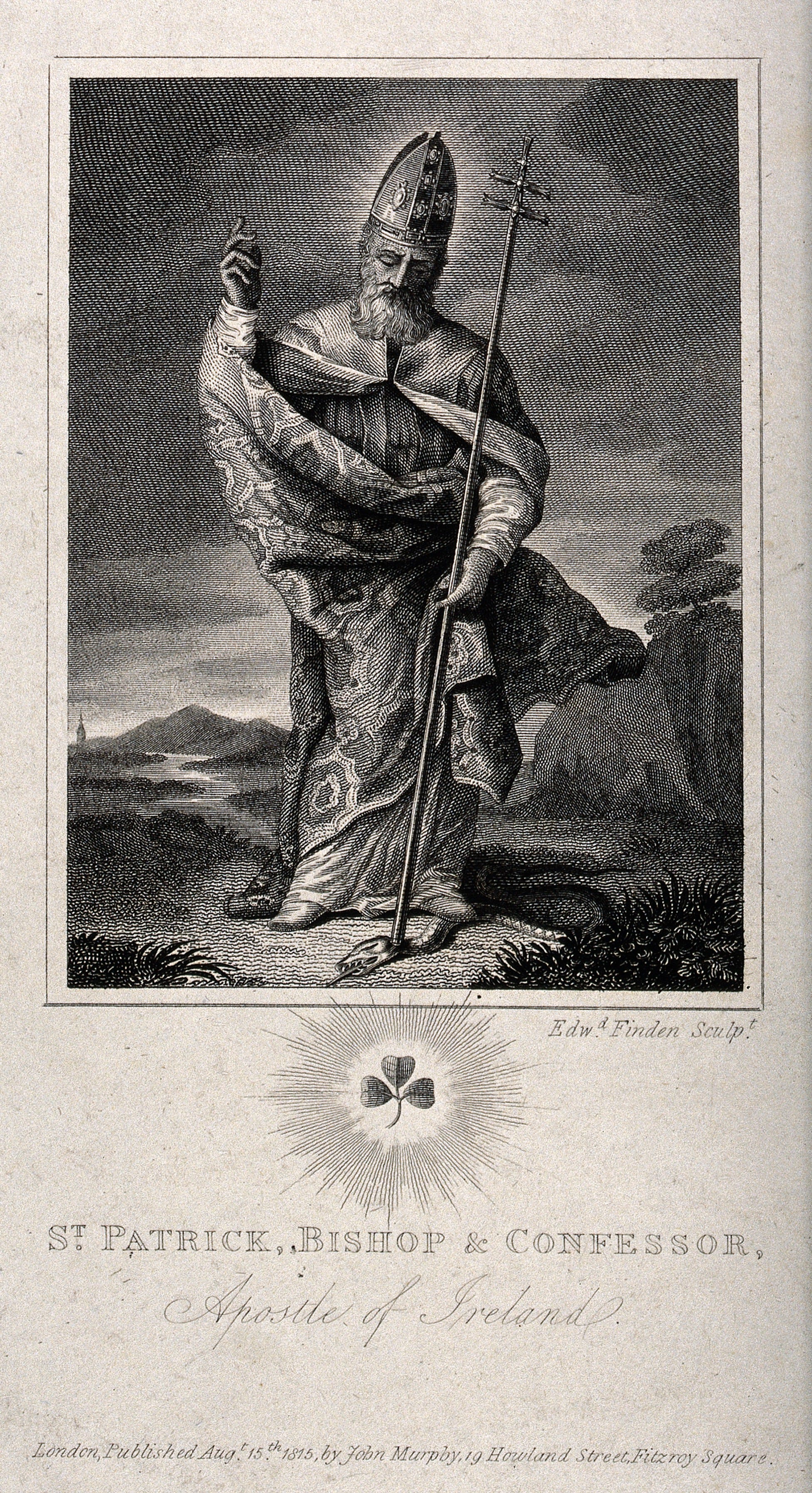
Patrick was born sometime in the late fourth or early fifth century, probably in Roman Britain, into a Christian family of some social standing. His father was a deacon, and his grandfather had been a priest. According to his own account, his childhood faith was nominal at best. He openly admits in his Confessio that he “did not then believe in the living God.”
When Patrick was about sixteen years old, Irish raiders attacked his village and took him into slavery. He spent six years in Ireland tending livestock, exposed to the elements, and cut off from everything familiar. It was during that captivity that he truly came alive to God. Prayer became the central part of his days. He states that he prayed a hundred times during the day and nearly as many at night, and through that prayer, something changed. The nominal faith of his childhood was transformed, and in the crucible of slavery, it became something he would risk his life for.
After six years, he believed he received a divine prompting to head to the coast, where a ship was waiting. He escaped, sailed back to Britain, and reunited with his family. By any reasonable measure, the story should have ended there. He had survived. He was home. Ireland was behind him.
But Patrick received a vision. In it, a man named Victoricus brought him letters from Ireland, and as he read the opening words, he heard the voices of the Irish people crying out: “We beg you, holy boy, to come and walk among us again.” He couldn’t shake it. Whatever Ireland had taken from him, he was going back.
A Theology Worn on the Body
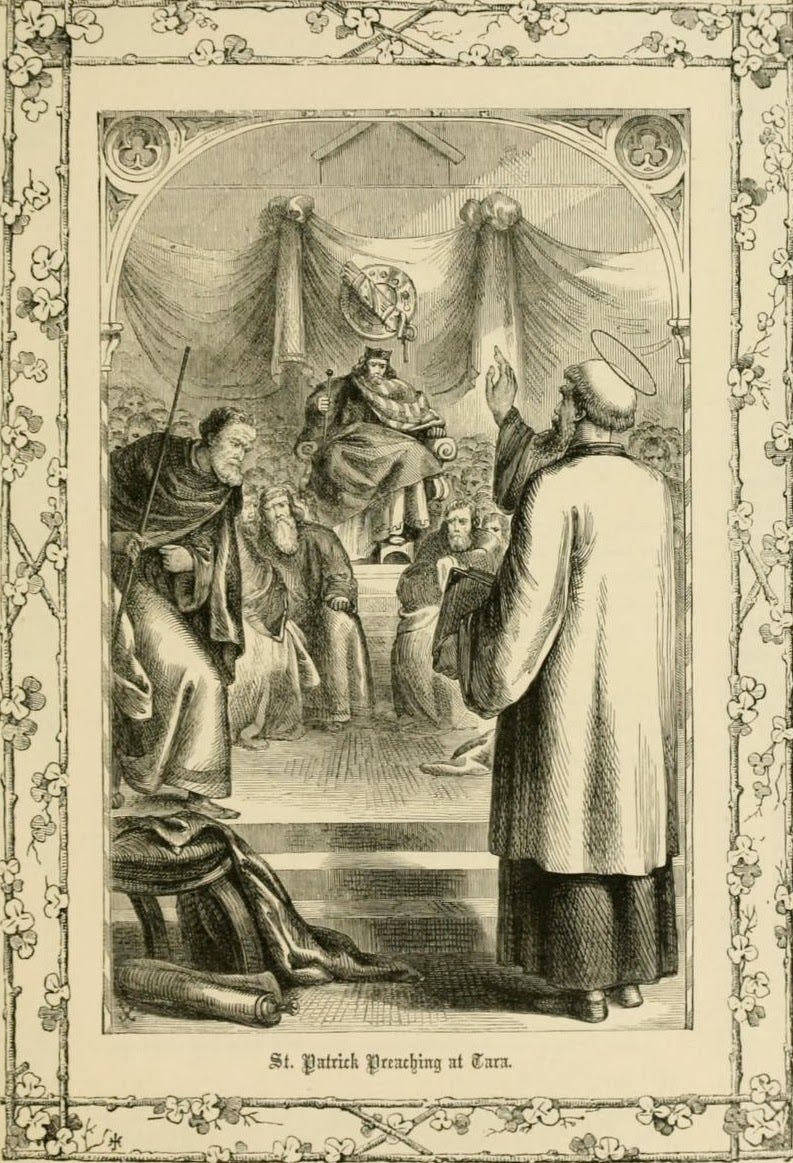
What Patrick carried back to Ireland was not simply goodwill or missionary ambition. He carried a theology, and it shaped everything about how he worked. The document known as St. Patrick’s Breastplate, or the Lorica, is traditionally attributed to him and, at a minimum, reflects later Patrick tradition. The prayer binds the believer to Christ in every direction and at every moment: Christ behind, before, beside, beneath, above, within. The language is not metaphorical decoration; it reflects a conviction that the risen Lord is genuinely, actively present in the life of the one who follows him.
That conviction animated Patrick’s courage. He worked in a genuinely dangerous culture, among people who had enslaved him, and amid criticism and suspicion from some fellow Christians. His Confessio is, in part, a defense of his ministry against critics who questioned his credentials and methods. He was not a polished ecclesiastical diplomat. He was a man who believed that the Lord who had found him in his captivity was sending him back, and that was sufficient.
A Missionary Method Worth Noting
Patrick’s approach to mission was notable for its patience and its cultural sensitivity. He did not simply transplant Roman Christian forms onto Irish soil. He engaged Irish culture on its own terms, working within existing social structures, building relationships with local rulers, and allowing the faith to take root in ways that could survive after he was gone. The monastic tradition that would later make Ireland famous as a center of Christian learning and manuscript preservation likely grew from the seeds Patrick planted.
He also had a sharp awareness of the eschatological scope of his work. He saw himself working at the world’s end, in the last days, gathering nations before Christ’s return. His mission was not a career; it was a calling with cosmic significance. “It is there that I wish to spend my life until I die,” he wrote in his Confessio. He stayed. He died in Ireland. The man who had been brought there in chains chose to remain.
The Snakes and the Shamrock
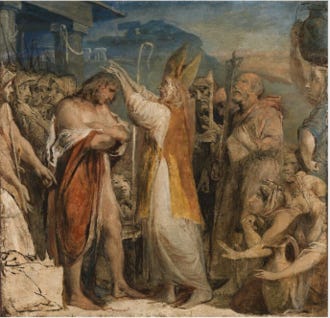
No snakes were driven from Ireland. The story appears nowhere in the early sources and almost certainly developed centuries after Patrick’s death as an allegorical way of talking about the expulsion of paganism. Ireland, as it happens, has no native snake population, almost certainly due to geography rather than apostolic intervention.
The shamrock story is more complex. The use of a three-leafed plant to illustrate the Trinity is first attested in sources that postdate Patrick by many centuries. Whether it goes back to him is impossible to verify. What can be said is that the illustration, wherever it originated, is theologically problematic, as generations of catechists and one very good YouTube video have taken pains to point out.
The deeper irony is that Patrick almost certainly taught about the Trinity, and did so with more precision than the shamrock illustration suggests. His Confessio begins with a careful trinitarian confession, and the theological world he inhabited was still echoing from Nicaea and Constantinople. The shamrock, at best, hints at a doctrine Patrick articulated more precisely than the illustration can convey.
Why Patrick Matters
Patrick matters because his life repeatedly challenges the idea that faith is a comfortable inheritance. He did not receive it easily; he received it in chains, in a field, in the cold, praying alone because there was no one else to pray with. And after receiving it, he neither protected nor domesticated it. He took it back to the people who had taken everything from him because he believed those people were loved by the same God who had found him in his captivity.
That is not just a legend. That is a life. And it’s a better story than anything the green beer can offer.
If you have made it this far, you have earned a prize. It’s a short video called “St. Patrick’s Bad Analogies,” in which Patrick attempts to explain the Trinity to two simple Irishmen with predictably disastrous results. Enjoy. Watch it here.
Important point about Patrick's efforts to practice cultural sensitivity. Enjoyed this quote: "through that prayer, something changed. The nominal faith of his childhood was transformed."