

The Illusion of Ownership (March 20, 2026)
Only Luke records the Parable of the Rich Fool, and its context is worth noting. A man in the crowd asks Jesus to settle an inheritance dispute with his brother. Jesus refuses to arbitrate and instead addresses the deeper issue behind the question. The surface issue is money; the real issue is what a person believes life’s purpose is.
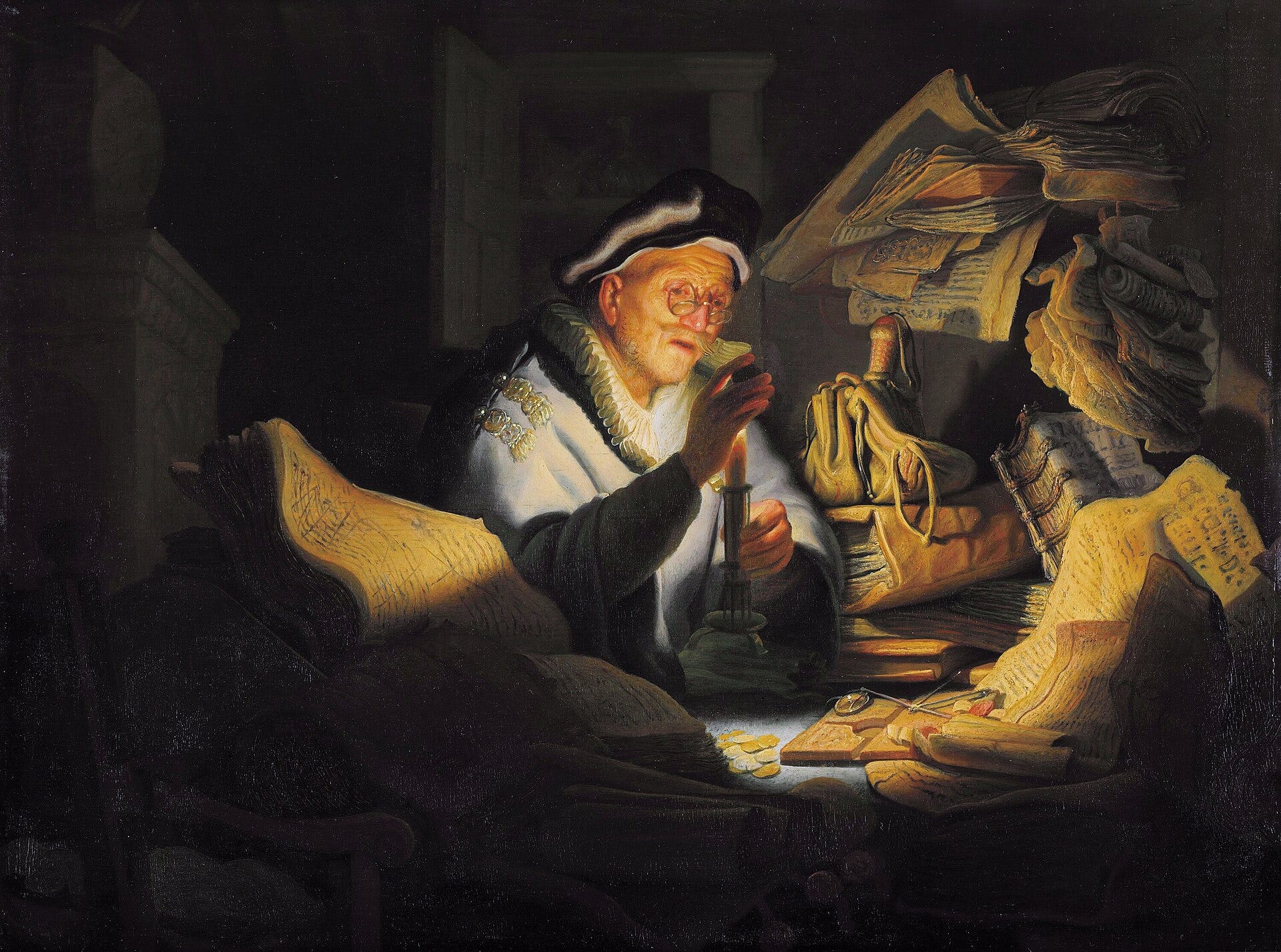
The parable Jesus shares is surprisingly simple. A wealthy man’s land yields a large harvest. With more grain than his barns can store, he chooses to build bigger ones. Then he says:
“Soul, you have ample goods laid up for many years; relax, eat, drink, be merry” (Luke 12:19).
Anyone familiar with the Old Testament would recognize the rhythm. Qohelet praises eating and drinking throughout the book of Ecclesiastes, but always as a gift received from God’s hand with open palms. The Preacher writes:
There is nothing better for a person than that he should eat and drink and find enjoyment in his toil. This also, I saw, is from the hand of God, for apart from him who can eat or who can have enjoyment? (Eccl 2:24-25).
The wealthy man reaches the right destination by the completely wrong path. He considers what is genuinely a gift as the earned reward of his own cleverness. Enjoyment shifts from being a simple reception to being a reward, and in that subtle switch, everything turns sour.
God’s response — “Fool!” — goes beyond just a moral judgment. The Greek word ἄφρων strongly echoes the “fool” in Ps 14:1, the one who claims in his heart that there is no God. The man’s foolishness isn’t mainly driven by greed but by functional atheism: he’s arranged his entire future as if God doesn’t exist.
What confirms the diagnosis is the verb God uses: ἀπαιτοῦσιν, which means “they are demanding back.” The subject is an implied “they,” an impersonal plural that, in Greek idiom, points to a force beyond human understanding. The soul he addresses so familiarly, as if it belongs to him, is being reclaimed by its true owner. He has been a tenant who forgot he was renting.
Jesus emphasizes the point in v. 21:
“So is the one who lays up treasure for himself and is not rich toward God.”
Any Jewish listener would have understood that being rich toward God also meant being generous to others. The man’s monologue includes no one else — no worker, no family member, no one in need. His prosperity had narrowed his world to just himself. The question the parable asks is whether we have done the same.
