

Authority on Earth (Feb 1, 2026)
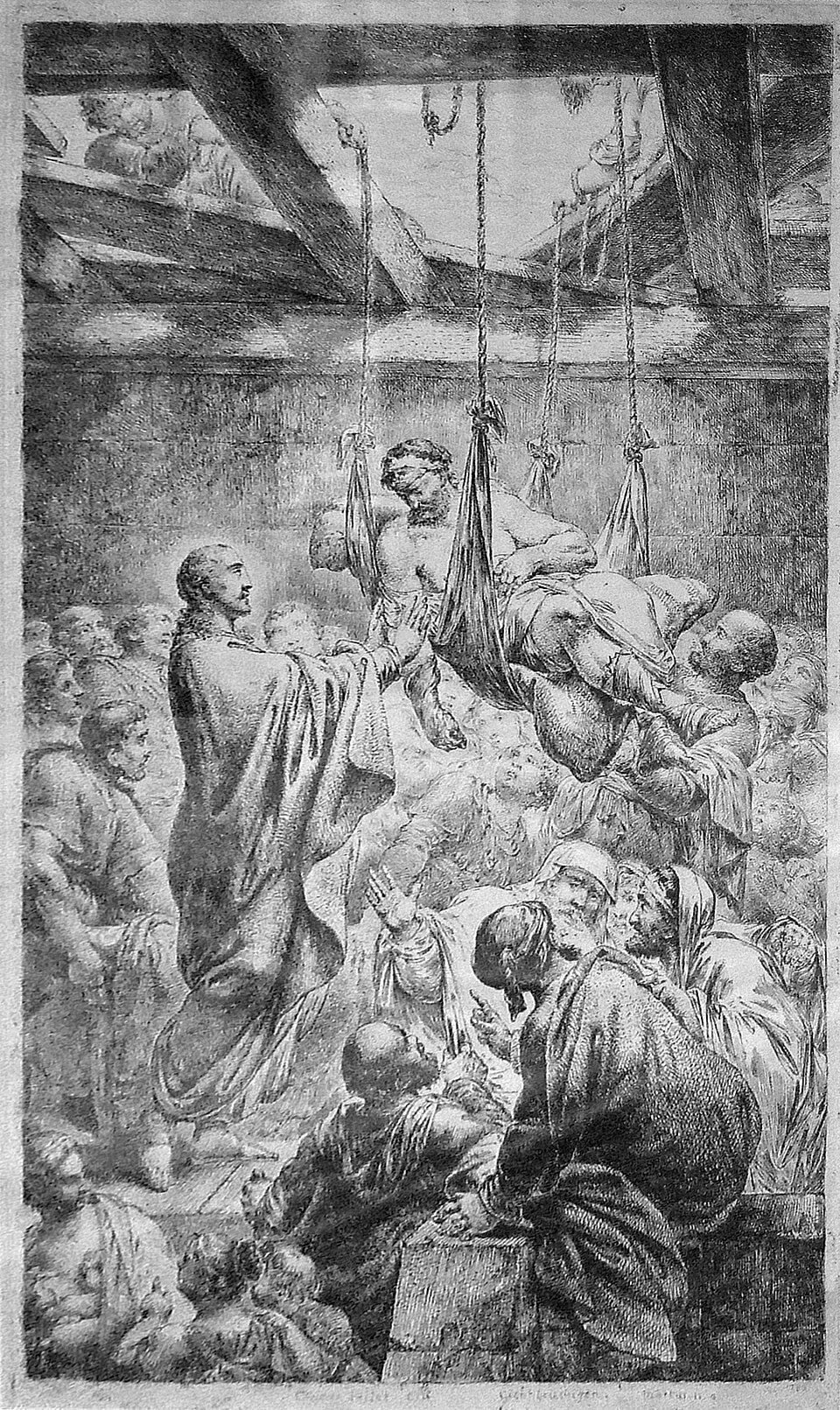
The friends brought the paralyzed man to Jesus expecting healing. What they received was something much more essential.
“Take heart, my son; your sins are forgiven” (Matt 9:2, ESV).
If you were that paralytic, you might have thought: “Thanks for the forgiveness update, but that’s not exactly what I came for!” Jesus, as always, went beyond expectations and addressed the deeper issue first.
The scribes immediately recognized what Jesus was claiming. Their silent accusation was powerful: blasphemy. They knew that only God forgives sins. When someone declares sins forgiven, he is acting as if he were the one God of Israel who alone “forgives iniquity and transgression and sin” (Exod 34:7). This wasn’t a small theological debate. From their point of view, Jesus was claiming to do what only the LORD—the one God acknowledged in Israel’s daily prayers—could do, and the penalty for blasphemy was death.
Jesus didn’t back down. Instead, he posed a riddle:
“Which is easier, to say, ‘Your sins are forgiven,’ or to say, ‘Rise and walk’?” (Matt 9:5).
Then came the stunning declaration: “But that you may know that the Son of Man has authority on earth to forgive sins”—and he healed the paralytic (9:6). Anyone can claim to forgive sins invisibly. But commanding a paralyzed man to walk? That’s immediately verifiable. The physical healing authenticated the spiritual one.
Notice also what Jesus called himself: “the Son of Man.” This self-designation echoes Daniel’s vision of “one like a son of man” who comes on the clouds of heaven and receives an everlasting kingdom from the Ancient of Days (Dan 7:13-14). In Jewish understanding, coming on clouds is something only God does. Jesus was issuing a cryptic challenge: Can you discern who I really am? As the heavenly Son of Man, he possessed authority on earth to do what only God can do—forgive sins.
The crowds glorified God “who had given such authority to men” (Matt 9:8). They sensed something unprecedented but didn’t fully grasp it yet. Do we? When we come to Jesus with our immediate needs, are we willing to let him address our deepest problem first—the breach between us and God?