

Promise Kept (Feb. 19, 2026)
Matthew has been working toward this moment since the first chapter. When the angel announced the birth of Jesus, he declared:
“You shall call his name Jesus, for he will save his people from their sins” (Matt. 1:21).
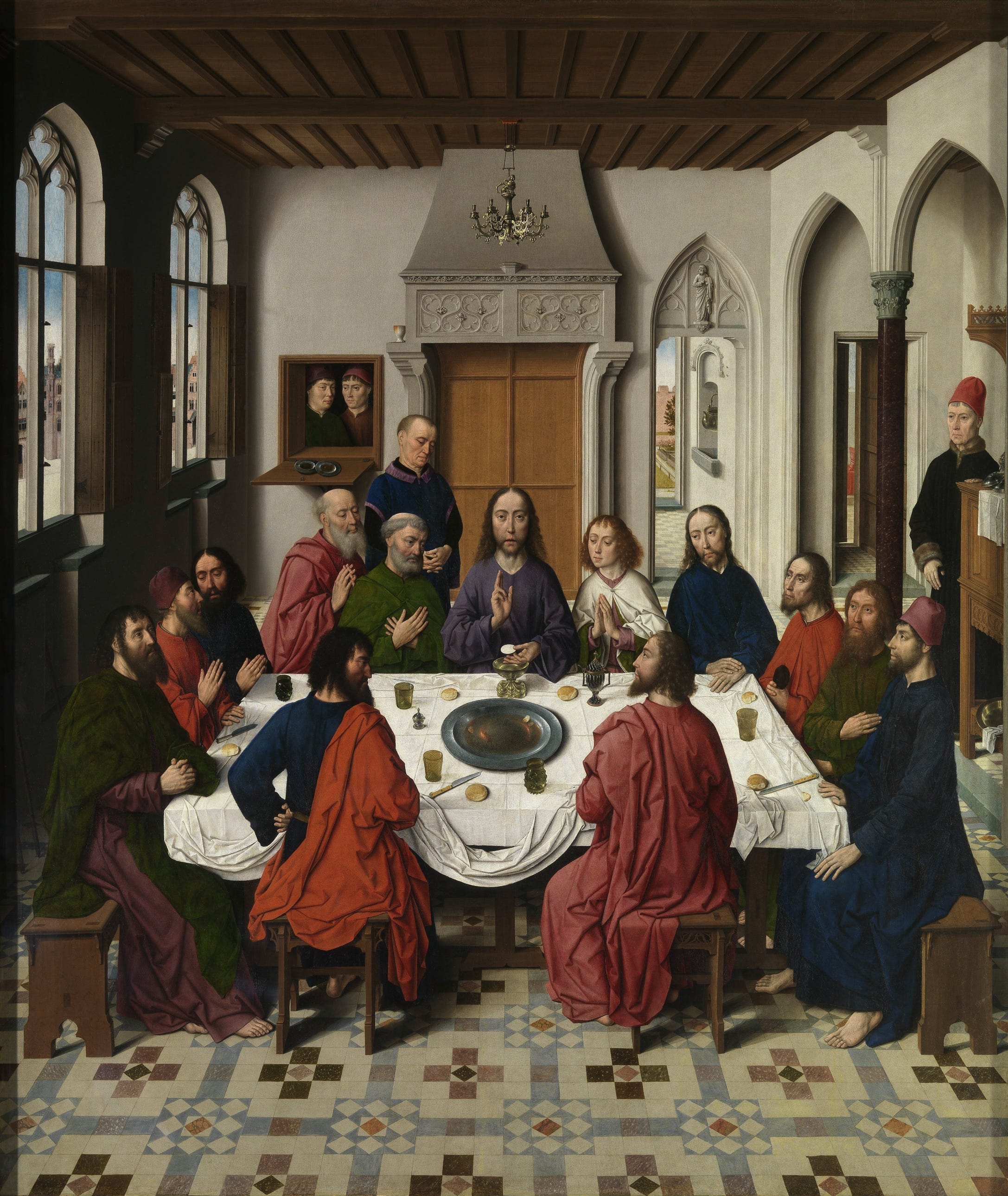
Twenty-six chapters later, Jesus himself gathers with his disciples in an upper room, takes the cup, and says something found in no other account of the Last Supper — not in Mark, not in Luke, and not in Paul’s independent tradition in 1 Cor. 11:23–25.
“For this is my blood of the covenant, which is poured out for many for the forgiveness of sins” (Matt. 26:28).
Mark and Luke include the words of institution, but neither Evangelist adds “for the forgiveness of sins.” Neither does Paul. Matthew alone includes those four words — and they are not accidental. They close a loop that has been open since the angel’s announcement before Jesus’ birth. The name and the mission have finally converged at the table.
The name and the mission have finally converged at the table.
The phrase also carries the weight of Israel’s deepest hope. When Jeremiah described the coming new covenant, he did not end with law written on hearts or the knowledge of God spreading among the people — though he promised both. He ended with this: “For I will forgive their iniquity, and I will remember their sin no more” (Jer. 31:34). Forgiveness was the covenant’s goal. Matthew presents Jesus as the one who arrives there, and the language Jesus uses is intentionally sacrificial. Blood poured out for many echoes the Levitical offerings and the suffering servant of Isaiah 53. Forgiveness comes not despite sacrifice but through it, and here Jesus himself is both the priest and the offering (Heb. 7:27).
This scene is one of those moments where Matthew’s careful structure becomes clear to an attentive reader. The Gospel isn’t just a collection of Jesus’s teachings and miracles loosely arranged around a passion narrative. Matthew is making a case. He presents Jesus as the one who will save his people from their sins, and he makes sure the reader doesn’t forget it. At the table, on the night before the crucifixion, Jesus explains what his death achieves. The forgiveness of sins isn’t a side note to the passion — it is its main purpose.
As you approach the Lord’s Table, reflect on what it means to receive the cup that Jesus himself explained. He did not leave the meaning unclear. The blood of the covenant is poured out for the forgiveness of your sins. The promise made before his birth is kept in the upper room.