

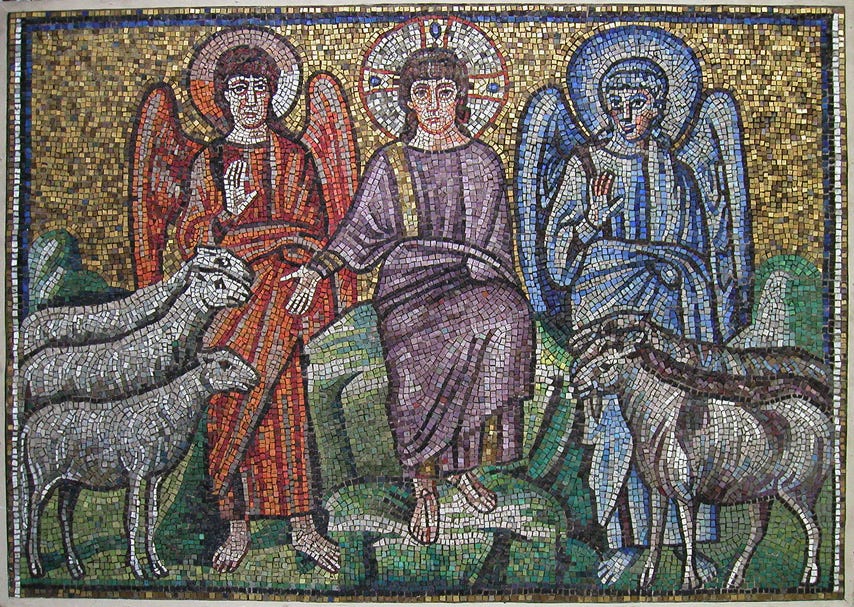
The Hidden Christ (Feb. 27, 2026)
Matthew’s Gospel begins with a name: Immanuel, “God with us” (1:23). It ends with a promise: “I am with you always, to the end of the age” (28:20). Between these two statements, Matthew 25 presents a question that every reader must answer — where, exactly, is Jesus present in the world right now?
The parable of the sheep and the goats provides a startling answer. When the Son of Man sits on his throne and separates the nations, the standard of judgment turns out to be surprisingly ordinary: food for the hungry, water for the thirsty, hospitality for the stranger, clothing for the naked, companionship for the sick and imprisoned. The righteous are confused. “Lord, when did we see you?” (v. 37). The guilty ask the same question (v. 44). Neither group realized what they were doing — or failing to do.
That double surprise is the key to understanding verse 40. Some scholars argue that “the least of these my brothers” (τῶν ἀδελφῶν μου τῶν ἐλαχίστων) specifically refers to Jesus’s disciples—missionaries who spread the gospel into hostile territory and relied entirely on the hospitality of strangers. Matthew does use ἀδελφοί this way elsewhere, and the mission discourse of chapter 10 makes receiving Jesus’s messengers the same as receiving Jesus himself. That is a consistent interpretation. But it clashes with the scene Matthew actually describes. If the nations were being judged by how they treated identifiable Christian missionaries, the universal shock of both groups wouldn’t make much sense. They would know exactly who those missionaries were and what was at stake in accepting or rejecting them.
The better reading takes that surprise seriously. Jesus identifies himself with the poor and suffering of the world in a way that goes beyond the community of disciples. The hidden presence of Christ in the vulnerable neighbor is not a metaphor. It is the logic of the Incarnation extended to every encounter with human suffering. Immanuel did not come to be with us in comfort and then depart. He came to dwell where human beings are most exposed — in hunger, in exile, in illness, in chains — and he remains there.
This reality changes the texture of ordinary life. Every act of mercy is an encounter with the living Christ, whether the giver knows it or not. The question Matthew 25 presses upon the reader is not whether you have said the right words or held the right beliefs, but whether you have learned to see Christ in the needy and vulnerable.
The fact is, most of us fall into both categories- sheep and goats. Most of us have done something in our lives as the sheep have done, and most have also neglected to do as the goats have done. Not an easy saying to understand.
I am not trying to be difficult… These are real questions which I am trying to resolve.