

Called a Nazarene? (2:19–23)
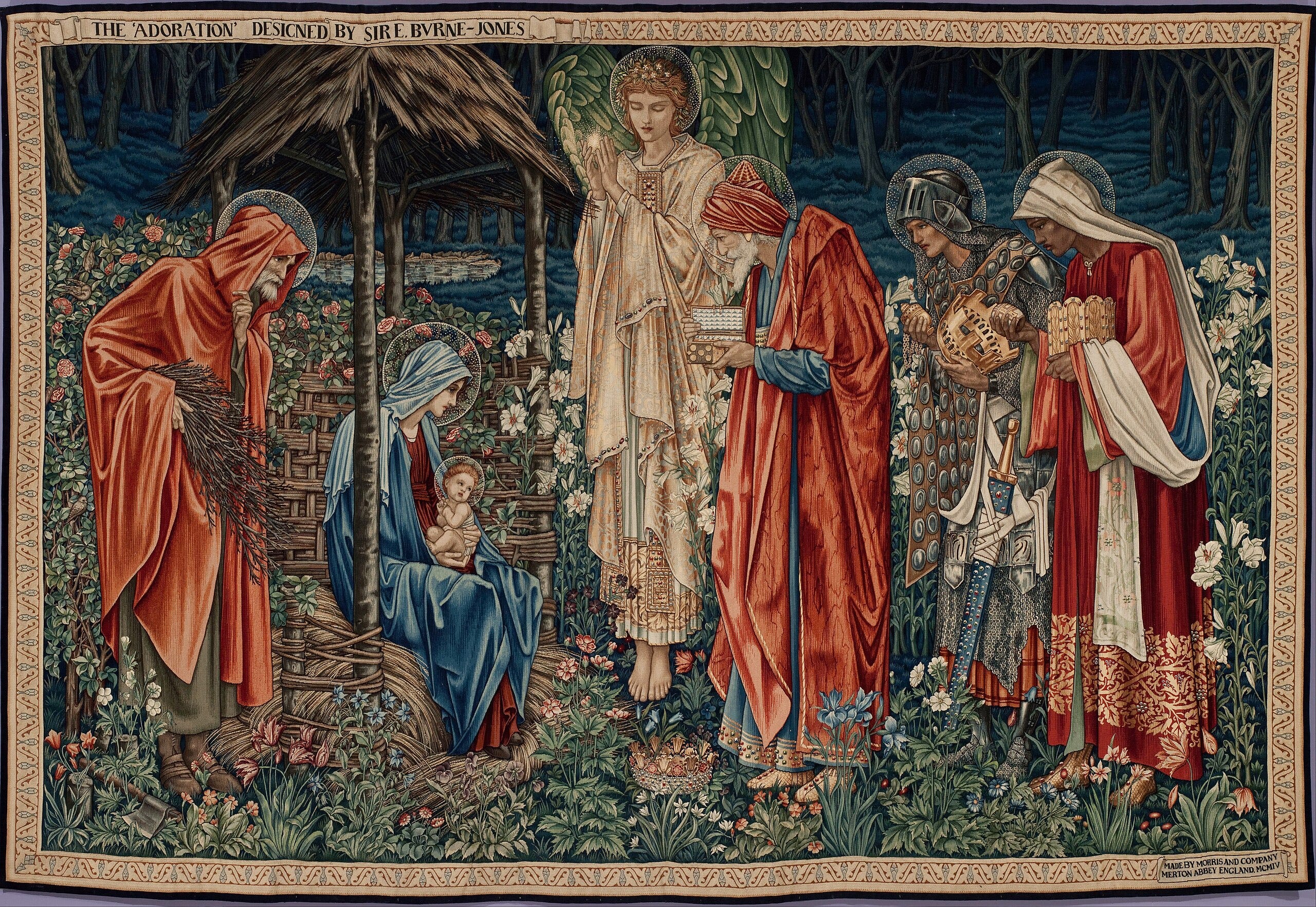
After Herod's death, an angel appeared to Joseph in a dream, telling him it was safe to return to Israel with Mary and the child (Matt 2:19–20). Joseph went, but when he learned that Herod’s son Archelaus now ruled Judea, he became afraid and decided to go to Galilee instead, settling in a town called Nazareth. Matthew concludes the chapter by saying this happened “so that what was spoken by the prophets might be fulfilled, that he would be called a Nazarene” (Matt 2:23).
The reader who doesn’t bother to check the OT context of Matthew’s citations might not notice anything strange here, but the attentive reader would notice almost immediately that there is no verse in the Old Testament that says what Matthew quotes here. Throughout this chapter, Matthew has quoted the OT to explain the movements of Jesus and the Holy Family, and each quotation is of a specific OT text. But here, at the end of that movement, as the Holy Family arrives in Nazareth, Matthew appears to have constructed a quotation out of thin air.
But there’s another oddity here. Matthew does not name “the prophet Isaiah” or “the prophet Jeremiah” as the source of his quotation. Instead, he cites “the prophets,” plural.
Matthew has just spent three verses proving that Jesus had to come from Bethlehem, the city of David, because the prophets said the Messiah would come from there. Now he has to account for why this same Jesus grew up known instead as “Jesus of Nazareth,” a name that later carried enough contempt that another disciple could ask, “Can anything good come out of Nazareth?” (John 1:46).
Rather than reaching for a citation, Matthew appears to point to a pattern running through the prophets as a whole: the one God was to send would arrive without the credentials anyone was looking for. Bethlehem answers the question of Davidic lineage. Nazareth answers a different question, the one about where God actually shows up, and the prophets, taken together rather than quoted one at a time, had already been answering it: in the lowest places, among the overlooked, and through those that nobody thought worth mentioning.
Rachel’s Weeping (2:16–18)
Then was fulfilled what was spoken by the prophet Jeremiah: “A voice was heard in Ramah, weeping and loud lamentation, Rachel weeping for her children; she refused to be comforted, because they are no more” (Matt 2:17–18).
Modern writers can quote extensively because writing is inexpensive and digital now. In ancient times, writing was costly, so instead of quoting entire texts, writers would mention only the most relevant parts and expect informed readers to fill in the rest. The late New Testament scholar Richard Hays calls this practice metalepsis: quoting a few words that imply the surrounding context, prompting the reader to recognize the echo and trace it back to its source.
So, when Matthew cites Jer 31:15 in Matt 2:17–18, the reader is meant to keep reading. It’s only two verses later in Jeremiah that God addresses Rachel’s grief:
There is hope for your future, declares the Lord, and your children shall come back to their own country (Jer 31:17).
Rachel weeps, yes. The desolation is real. But the reference to Rachel weeping in Jeremiah introduces a context that refuses to let grief be the last word. The weeping in Jer 31:15 is part of a larger theme of restoration. In fact, a careful reader might notice that the chapter Matthew quotes is Jeremiah 31, the well-known new-covenant chapter. The same Scripture passage that provides Matthew with his image of Rachel weeping also promises:
Behold, the days are coming, declares the Lord, when I will make a new covenant with the house of Israel and the house of Judah, not like the covenant that I made with their fathers on the day when I took them by the hand to bring them out of the land of Egypt, my covenant that they broke, though I was their husband, declares the Lord. For this is the covenant that I will make with the house of Israel after those days, declares the Lord: I will put my law within them, and I will write it on their hearts. And I will be their God, and they shall be my people (Jer 31:31–33).1
Matthew situates the slaughter of the innocents within the framework of Jeremiah 31, which reflects both real grief over the exile (Rachel weeping) and the promises of hope and renewal (the new covenant). According to Matthew, if a non-Davidic king ruling over Judah on behalf of a foreign nation can slaughter the infant offspring of Abraham, Isaac, and Jacob, then the exile had not ended, and Rachel is still weeping for her children.
And yet, hope endures. The same God who committed to ending the Babylonian exile and who promised a covenant written on hearts instead of stone is now working through the child Herod seeks to kill to establish the long-awaited new covenant.
This is how the authors of the New Testament read Scripture. They cite a verse and activate a whole chapter. Rachel weeps in verse 15. God answers in verse 17. The new covenant is promised in verse 31. The child who survived Bethlehem is the one through whom that covenant will be enacted.
The exile is not over, which is why Rachel is still weeping, but the one who will bring it to an end has already been born.
Out of Egypt (2:13–15)
Because Herod the Great was seeking to kill Jesus, the Holy Family fled to Egypt and stayed there until Herod’s death. Matthew editorializes:
This was to fulfill what the Lord had spoken by the prophet, “Out of Egypt I called my son” (Matt 2:15, ESV).
The passage quoted is Hosea 11:1, but it is not a prophecy about the Messiah. Instead, it is a historical comment on what God has done in the past, followed by a warning of impending judgment because of the people’s sin.
When Israel was a child, I loved him, and out of Egypt I called my son. The more they were called, the more they went away; they kept sacrificing to the Baals and burning offerings to idols. … They shall not return to the land of Egypt, but Assyria shall be their king, because they have refused to return to me (Hos 11:1–2, 5).
But the prophetic word concludes with hope.
They shall go after the Lord; he will roar like a lion; when he roars, his children shall come trembling from the west; they shall come trembling like birds from Egypt, and like doves from the land of Assyria, and I will return them to their homes, declares the Lord (Hos 11:10–11).
How then does Jesus “fulfill” (or, as I prefer, “fill full”) this prophecy?
Jesus is recapitulating the story of Israel. The people were sent away from the land for a time, and now Jesus is as well. But in this child, the great return from exile is happening. Because of him, the long-awaited New Exodus is unfolding in unexpected and new ways.
This recapitulation matters because Jesus doesn’t just retell Israel’s story—he invites us into it. If you feel lost, in exile, or spiritually distant from home, Jesus has experienced that too. He understands what it’s like to be a refugee, to wait for God’s timing, and to trust the Father when everything feels uncertain.
And because Jesus has successfully completed Israel’s journey—enduring exile and achieving the return—he can bring us home too. The New Exodus he inaugurates isn’t just about ancient Israel finally returning from Babylon. It’s about every person who feels lost, wandering, or distant from God finding their way home through him.
The child who fled to Egypt became the man who said, “Come to me, all who labor and are heavy laden, and I will give you rest” (Matt 11:28). He perfectly embodied Israel’s story so that we could walk it with him—through wilderness and exile, yes, but always heading home.
January 6, 2026 - Epiphany
Every so often, we'll deviate from our consecutive reading pattern, and today is one of those days. Because it's Epiphany, we'll read Matthew 2 and recall the revelation of Christ to the Gentiles. I recently preached two sermons on Matthew 2, so I won’t repeat everything I said here. If you want to read them, the two sermons are below. Because of the church calendar and lectionary sequence, I preached them in reverse order, but either order should work. Have a blessed Epiphany!

See, it didn’t cost me anything extra to quote all those additional verses. I’m not paying for ink or paper, both of which were expensive in the ancient world.
In Matthew Henry’s commentary, it says this regarding the Nazarene reference:
“[1.] The Man, the Branch, spoken of, Isa. 11:1. The word there is Netzar, which signifies either a branch, or the city of Nazareth; in being denominated from that city, he is declared to be that Branch.”
Seems a bit of a stretch but plausible?
I am always staggered by the sheer brutality of Herod and those who followed his orders to kill the male children two years old and younger! Oh how the innocent suffer when a tyrant is in leadership. I find myself grieving for the children and babies and their parents. My gosh — can you imagine the rage, fear, and overwhelming grief at their inability to protect their babies?!