

A Little Leaven (16:5–12)
Jesus has just fed four thousand people from seven loaves with baskets left over, and this was after feeding five thousand from five loaves in the chapter before. He and the disciples cross the lake, and Matthew says that the disciples had forgotten to bring any bread (16:5).
Jesus uses this moment to warn his disciples about the leaven of the Pharisees and Sadducees. The disciples assume he means the bread and begin arguing about their lack of it, until he corrects them, and he specifically recalls the two previous feeding miracles.
Jesus’ warning follows immediately upon the Pharisees and Sadducees' demand for a sign from heaven (16:1–4). Readers in the first century would have seen this as an odd pairing, since the Sadducees denied the resurrection and angels, convictions Pharisees held as fundamental. What united them was opposition to Jesus. Matthew alone pairs the two this way, and he does so repeatedly (3:7; 16:1, 6, 11–12).
The image of leaven is drawn from a practice kept in every Jewish household at Passover. The law required leaven to be entirely removed from the house for seven days (Exod 12:15, 19; 13:7). Leaven worked by going unseen. A small portion, folded into a large batch of dough, would spread through the whole, and by the time the dough had risen, its work was finished. Leaven works in secret, changing the whole of the dough, and leaven could spoil too.
The disciples thought Jesus was talking about bread. They weren’t getting the metaphor. The things that corrupt us and change us are often subtle, like leaven in a batch of dough, but that doesn’t mean they won’t change us thoroughly.
The Keys of the Kingdom (16:13–20)
Peter’s confession at Caesarea Philippi is the pivot of Matthew’s Gospel. Jesus has been asking who people say the Son of Man is; now he narrows the question to his own disciples. Peter answers:
“You are the Christ, the Son of the living God” (16:16).
Jesus pronounces Peter blessed, says that the insight came not from flesh and blood but from the Father, and then renames him. Simon becomes Peter, a name change in the pattern of Abram becoming Abraham and Jacob becoming Israel. Peter’s new name includes a new commission that has generated centuries of ecclesiological debate:
“And I tell you, you are Peter, and on this rock I will build my church, and the gates of hell shall not prevail against it. I will give you the keys of the kingdom of heaven, and whatever you bind on earth shall be bound in heaven, and whatever you loose on earth shall be loosed in heaven” (16:18–19).
Jesus is drawing on the language of Isaiah 22. In that oracle, God announces the removal of Shebna, the corrupt royal steward of Hezekiah’s palace, and his replacement by Eliakim, son of Hilkiah:
“I will place on his shoulder the key of the house of David; he shall open, and none shall shut; and he shall shut, and none shall open” (Isa 22:22).
The Eliakim typology clarifies what the ecclesiological debate has often obscured, but first, the debate itself needs sharpening. The Protestant argument that “this rock” refers to Peter’s confession rather than to Peter himself depends on a distinction between Πέτρος and πέτρα in 16:18. The distinction does not hold.
Greek grammar requires a man’s name to take the masculine form; when Jesus then says “on this rock,” the noun reverts to its natural feminine form, πέτρα. The gender shift is a grammatical necessity, not a semantic signal. The Aramaic underlying Jesus’s words would have used the same term both times, which is why Peter is called Cephas elsewhere in the New Testament. The rock on which Jesus builds his church and the man he has just renamed are the same referent.
With that established, the Eliakim typology can now do its work. The Catholic instinct is right that the authority Jesus gives here is real and personal. It belongs to Peter, not to an abstraction. But the authority is stewardship, not sovereignty. Peter holds the keys because the king has placed them on his shoulder, just as Eliakim held the key of the house of David.
The Protestant instinct is right that the keys cannot be detached from the confession in 16:16, since Eliakim receives the key precisely because he is the faithful steward rather than the corrupt one. The confession stripped of the office leaves the household without a governor.
Matthew 18:18 will extend binding and loosing to the disciples collectively, but the key in 16:19 is given to Peter specifically, as it was given to Eliakim, not to the household generally. We can have all kinds of debates about what this means, but what Jesus says is actually rather clear.
The church has a king, and that king has appointed a steward. The steward’s authority is real, personal, derived, and exercised within the household on the king’s behalf. That is the office Jesus establishes here, and the allusion to Isaiah 22 is the necessary context that the debates often miss.
The Messiah They Didn’t Expect (Feb 8, 2026)
One moment, Peter is blessed for confessing Jesus as the Christ, the Son of the living God. The next moment, he is called Satan. What happened?
From that time Jesus began to show his disciples that he must go to Jerusalem and suffer many things from the elders and chief priests and scribes, and be killed, and on the third day be raised. And Peter took him aside and began to rebuke him, saying, “Far be it from you, Lord! This shall never happen to you.” But he turned and said to Peter, “Get behind me, Satan! You are a hindrance to me. For you are not setting your mind on the things of God, but on the things of man” (Matt. 16:21–23).
Peter’s confession was true, but his understanding was incomplete. He recognized Jesus as the Messiah, but like most first-century Jews, he expected a Messiah who would overthrow Rome, restore Israel’s kingdom, and reign in glory. When Jesus started explaining that he must go to Jerusalem to suffer and die, Peter rebuked him. This was not the plan. Messiahs do not die. They conquer.
Jesus’s response is sharp. “Get behind me, Satan!” Peter’s well-intentioned rebuke echoes the temptation in the wilderness: take the kingdom without the cross, claim the crown without the suffering. But there is no other way. The Son of Man must be delivered into the hands of sinners. The temple will be destroyed and raised in three days. The grain of wheat must fall into the ground and die.
Then Jesus opens this path to everyone who chooses to follow him.
If anyone would come after me, let him deny himself and take up his cross and follow me (Matt. 16:24).
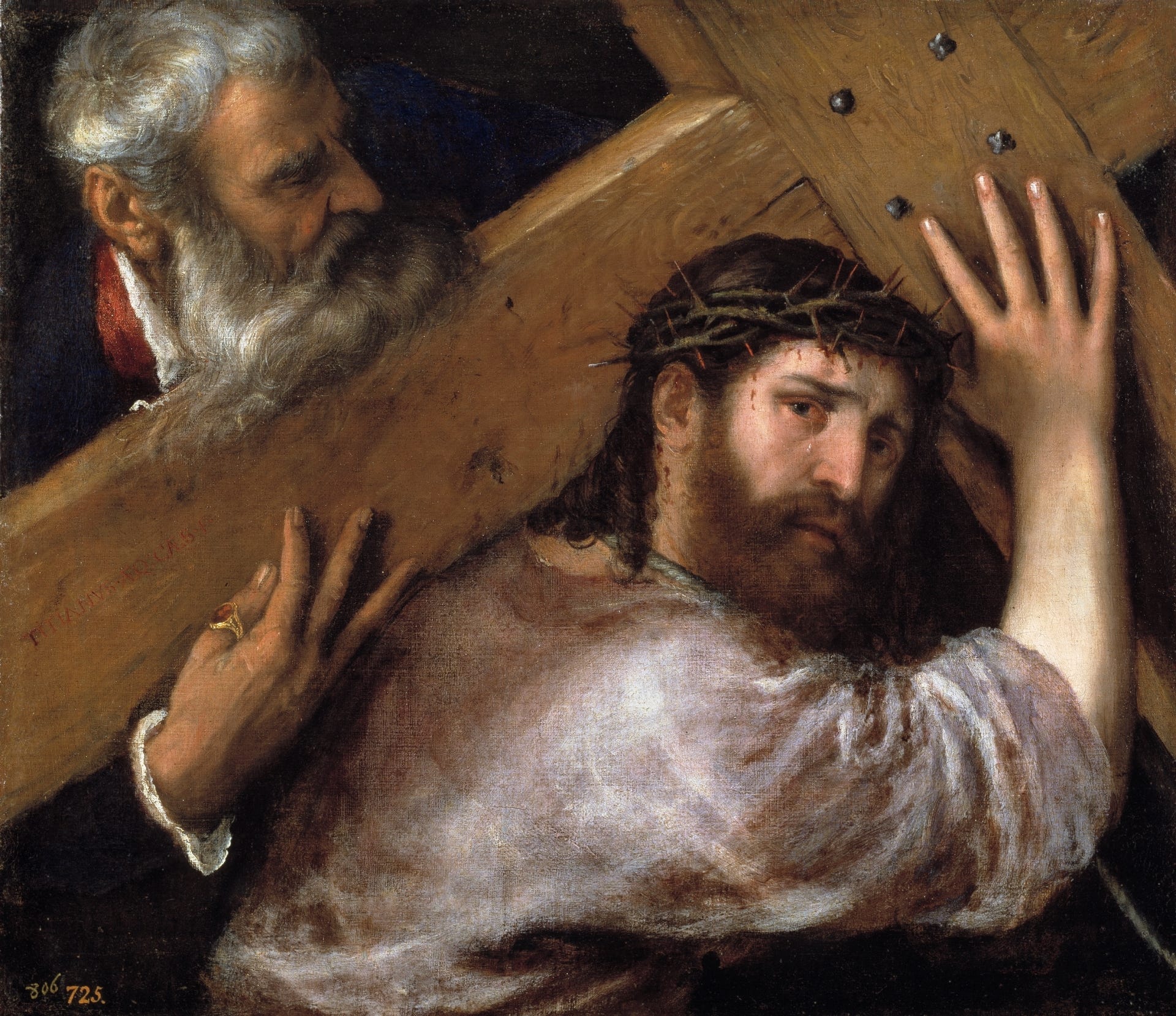
The cross is not a symbol for minor troubles or challenging times. In the first century, everyone understood what a cross represented. It was a tool of execution used on those who dared to rebel against the Roman Empire. To take up your cross meant walking the path toward your own death.
This is the Messiah we confess. Not one who promises comfort and success, but one who calls us to die. Not one who validates our ambitions, but one who demands we surrender them. We want a Jesus who blesses our plans. Jesus offers us a cross.
The question is whether we will follow the Messiah we want or the Messiah (and Lord!) that Jesus truly is. Will we confess Christ with our words while rejecting his path with our actions? Or will we take up our cross and follow him, even if it costs us everything?
I am reminded that this is what is wrong with the prosperity gospel espoused by so many! Jesus himself said His way was the narrow way and often the way of suffering. If we are going to say we follow Him, we must echo the words of Job “yet though he slay me, I will trust in him!”