

A Kingdom of Incomparable Value (Feb. 5, 2026)
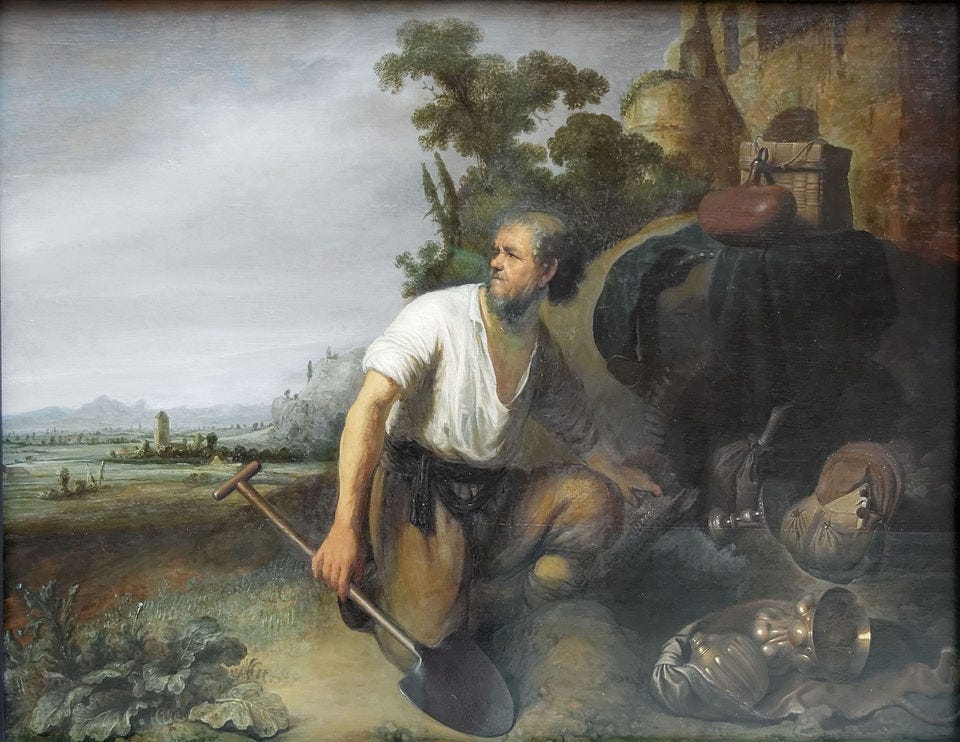
The parables of the hidden treasure and the pearl of great price might be the shortest parables Jesus ever told. Three verses, two images, one point. The kingdom of heaven is like a treasure hidden in a field that someone accidentally finds and happily sells everything to obtain. The kingdom of heaven is also like a merchant seeking fine pearls who, upon finding one of great value, sells everything to buy it. Both parables conclude the same way: total liquidation, full commitment, and gaining something that makes everything else seem worthless in comparison.
What strikes me first is the different paths to discovery. One person accidentally finds treasure while working or passing through a field. The other deliberately seeks fine pearls as part of their profession. Some of us stumble into the kingdom unexpectedly, surprised by grace we never knew to look for. Others search for years, examining different philosophies and religions, until we finally encounter the one thing our seeking hearts were made for. The kingdom welcomes both the surprised and the seekers, the accidental and the intentional.
But notice what they share. Both recognize incomparable value when they see it. Both respond with joy rather than reluctance. The man who finds the hidden treasure does not grimly calculate what he must sacrifice. He acts “in great delight” (Matt. 13:44, ESV). Both are willing to sell everything they have, not out of duty but desire, not from obligation but from the overwhelming realization that they have found something worth infinitely more than everything else combined.
These parables challenge the idea that religions are like pearls to collect or different experiences to gather on our spiritual journey. There is only one great pearl. There is only one treasure trove. Everything else is insignificant beside it. The gospel of the kingdom that Jesus proclaims and embodies is not just one option among many religious paths. It is the singular treasure that puts all other allegiances, identities, and sources of meaning into perspective.
This creates urgency. The kingdom isn’t a pleasant idea to consider when it’s convenient. It requires a decision. What might it cost us to acknowledge that Jesus and his kingdom are the one thing worth having? What would it look like to sell everything else—not necessarily our possessions, but our other loves, our alternative securities, our carefully gathered religious experiences—to gain the one treasure that will never disappoint us?