

Worth More Than a Sheep (12:9–14)
Jesus has just walked into a trap. He goes to the synagogue, and there is a man there with a withered hand. Rather than seeing this as an opportunity for the healing power of God’s kingdom to be at work in and through Jesus, the Pharisees see it as a chance to lay a trap for him. They ask him a question about healing on the Sabbath “so that they might accuse him” (12:10).
But Jesus answers their question with a question of his own:
“Which one of you who has a sheep, if it falls into a pit on the Sabbath, will not take hold of it and lift it out? Of how much more value is a man than a sheep! So it is lawful to do good on the Sabbath” (12:11–12).
The form of this argument is known as a fortiori: if the lesser case, an animal, already justifies action, the greater case, a human being, justifies it even more. In making this argument this way, Jesus is appealing to something he expects his hearers to already grant.
Except not everyone would have granted it. The Qumran community’s Damascus Document rules on this exact scenario, and it rules the other way:
“No one shall deliver an animal on the Sabbath day. And if it fall into a cistern or a pit, one may not lift it out on the Sabbath” (CD 11:13–14).
For the Qumran community, who wrote the Dead Sea Scrolls, the animal was to wait for rescue until the Sabbath had ended. Jesus’s question shows that the answer he expected, that a suffering creature warrants direct help, was neither self-evident nor universal in the first century. But for Jesus, if a sheep’s distress justifies breaking the Sabbath’s letter, a man’s withered hand justifies it more, not less.
But notice how Jesus heals the man. “Stretch out your hand,” he says, “and the man stretched it out, and it was restored, healthy like the other” (12:13).
No touch. No labor. Nothing that could plausibly be classified as work under any reading of the law. The only thing Jesus does that resembles work is ask a question and speak a few words.
The chapter’s final verse turns the argument back on the men who raised it.
“The Pharisees went out and conspired against him, how to destroy him” (12:14).
They came looking for grounds to accuse a man of doing harm on the Sabbath. They leave plotting murder. Whatever the outer boundary of Sabbath law was in the first century, taking a man’s life was never inside it.
Legalism isn’t just about an excess of rules. It’s also what happens when the rules stop serving the purpose for which they were given. Jesus does not ask us to discard the law. He asks us to notice what the law was for. A hand made whole is not a violation that needs to be justified. It is exactly the kind of thing the Sabbath was always pointing toward.
A Bruised Reed He Will Not Break (12:15–21)
In Second Isaiah (chapters 40–55), Yahweh repeatedly addresses Israel with a unique title: “my servant.” The nation is chosen, supported, and tasked with fulfilling Yahweh’s purposes before the nations. The first Servant Song (Isa 42:1–4) begins this sequence.
The Spirit is given, and the mission is justice for the Gentiles (42:1). The approach, notably, is quietness (42:2). No public dispute, no voice raised in the streets. The Servant completes his work not through force but through careful care for those who are barely surviving.
A bruised reed he will not break, and a faintly burning wick he will not quench (Isa 42:3).
A bruised reed, cracked and weakened, was useless as a flute or writing instrument and would typically be tossed away. A smoldering wick gave no light and would be snuffed out. Both describe something on the verge of destruction, nearly spent. The Servant of Yahweh does not destroy them. He cares for them.
Matthew 12 centers on this very depiction. By verse 14, the Pharisees are already plotting to kill Jesus. His response is to withdraw. He heals all who follow him and tells them not to reveal his identity. Matthew (12:18–21) then quotes all four verses of Isaiah 42:1–4. The election language he begins with (“my servant whom I have chosen, my beloved with whom my soul is well pleased,” Matt 12:18) is almost identical to the language the voice from heaven used at Jesus’ baptism (3:17). In Isaiah, “my servant” is Israel. In Matthew, the one who embodies what Israel was called to be is Jesus: chosen, Spirit-endowed, and sent to establish justice for the nations through the way of the cross.
The contrast that the quotation highlights is structural. The one who refuses to break a bruised reed has people plotting to destroy him. He heals everyone who comes to him and asks for no recognition.
One of Matthew’s changes to the Isaiah text deserves notice. Where the Hebrew says that the Servant will bring justice “faithfully,” Matthew translates it as “until he brings justice to victory” (12:20). The Servant’s silence is not passivity. It signifies movement toward final victory, the journey through the cross that Matthew’s Gospel is already beginning to reveal.
You probably know people who are bruised reeds, barely holding themselves together. The temptation is to see their fragility as a burden rather than a calling. The Servant’s way moves in the opposite direction: tending to those who are nearly spent, speaking without shouting, and refusing to stop until what is broken has been made whole.
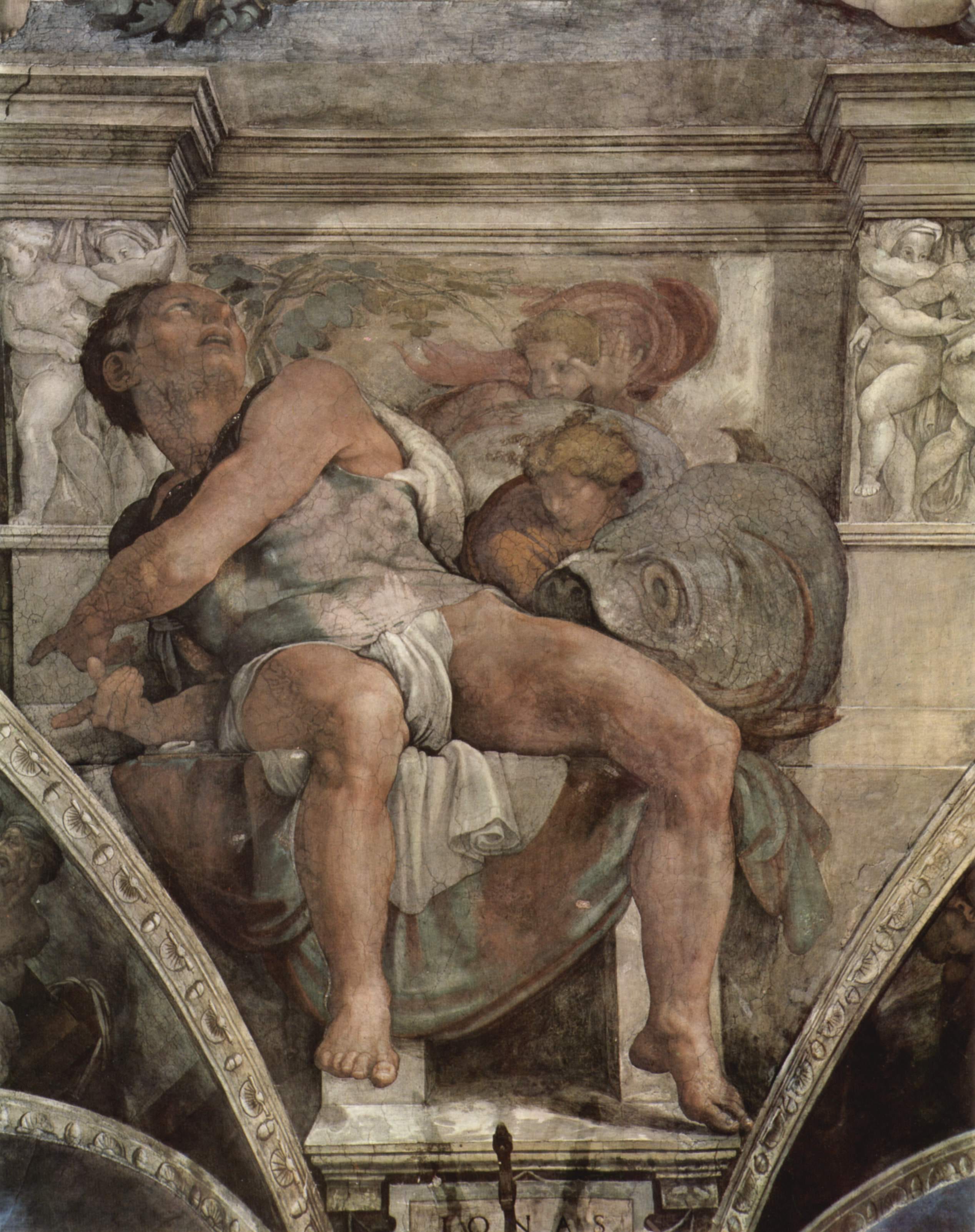
The Sign of the Prophet Jonah (12:38–42)
The apostle Paul reminds the Corinthians of the gospel’s core:
Christ died for our sins in accordance with the scriptures...he was raised on the third day in accordance with the scriptures. (1 Cor. 15:3-4, ESV)
But which scriptures? The prophet Hosea speaks of Israel being raised up “on the third day” (Hos. 6:2), and because Jesus embodies Israel, his resurrection fulfills this prophecy of the nation’s restoration. But there is another scripture Jesus himself explicitly cites as pointing to his third-day resurrection: the sign of Jonah.
When scribes and Pharisees demand a sign from him in Matthew 12, Jesus responds:
An evil and adulterous generation seeks for a sign, but no sign will be given to it except the sign of the prophet Jonah. For as Jonah was three days and three nights in the belly of the great fish, so will the Son of Man be three days and three nights in the heart of the earth. (Matt. 12:39-40)
This saying represents the only place in the Gospels where Jesus explicitly connects his resurrection to a specific Old Testament text.
But what makes Jonah an apt parallel? As biblical scholar Brant Pitre observes, if you read Jonah’s prayer carefully, you discover something remarkable. Jonah cries out “from the belly of Sheol” and “the Pit” (Jonah 2:2, 6), both standard Old Testament terms for the realm of the dead. He says his soul fainted within him (2:7), the language of dying. Then God speaks to the fish, and it vomits Jonah onto dry land. What is the first word God speaks to Jonah? “Arise” (3:2). This is the same word Jesus uses when he raises Jairus’s daughter from the dead: “Little girl, I say to you, arise” (Mark 5:41). The story of Jonah, then, presents a death and resurrection after three days—exactly the pattern Jesus claims for his own rising.
But the sign of Jonah is not only about resurrection. It is also about what follows: Gentile conversion.
The men of Nineveh will arise at the judgment with this generation and condemn it, for they repented at the preaching of Jonah, and behold, something greater than Jonah is here. (Matt. 12:41)
The Ninevites were Gentiles, and not just any Gentiles. Nineveh was the capital of Assyria, one of Israel’s fiercest enemies. Their mass repentance was the climax of Jonah’s story. Jesus says his sign will be twofold: the resurrection after three days and the repentance of Gentile nations throughout the world.
You are living inside the fulfillment of this sign. The global church, composed mainly of non-Jews who have turned from idols to worship the God of Israel, is ongoing evidence that something greater than Jonah is here.
This really ministers to me this morning. The circumstances I’m in make me feel like a bruised reed. I so needed the encouragement that “Jesus tends to those who are nearly spent, refusing to stop until what is broken has been made whole”. Thank you