

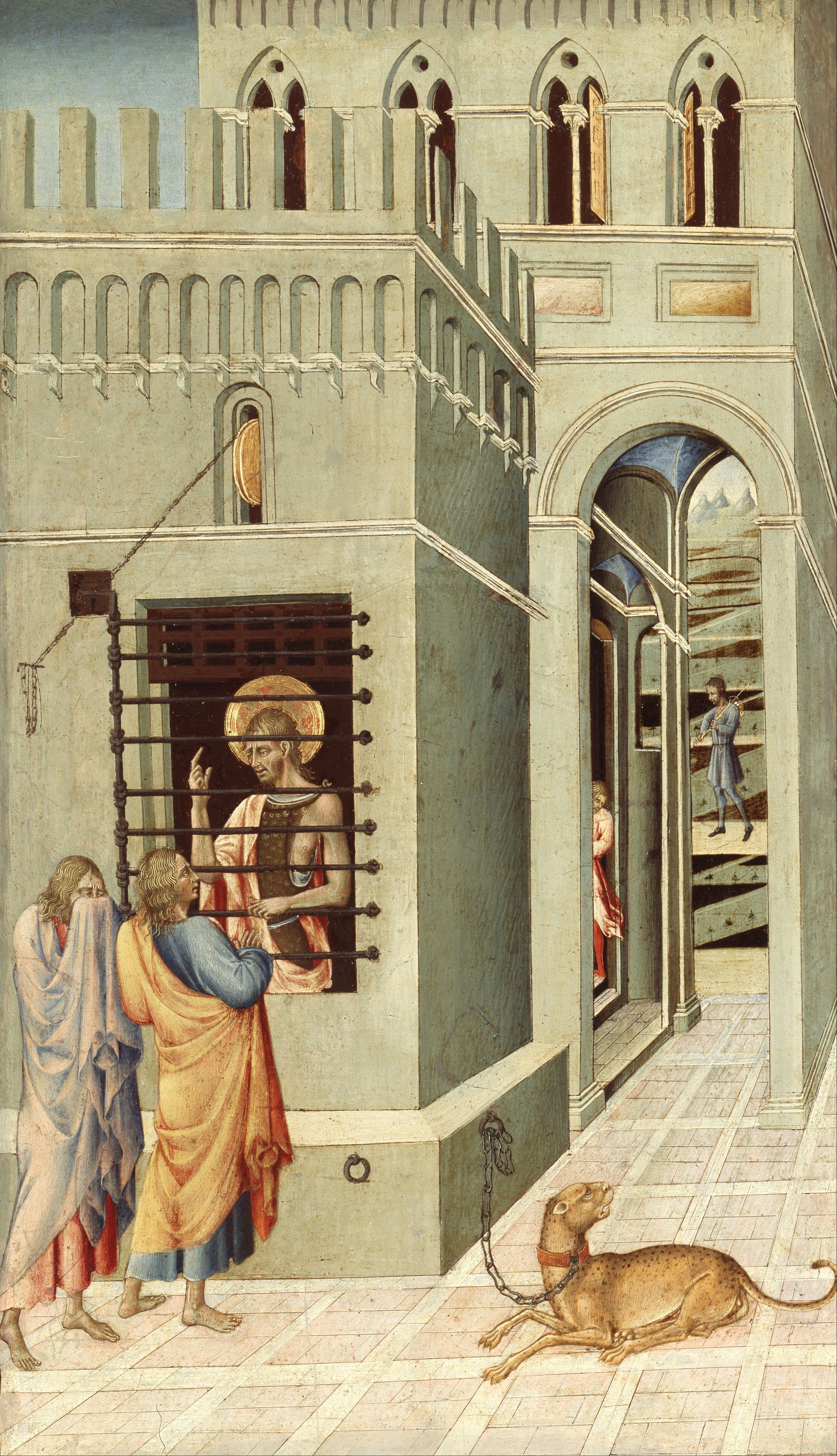
February 3, 2026 - “What You Hear and See”
John the Baptist is in prison. He has already declared Jesus as the one who is to come — he is the voice crying in the wilderness, the forerunner of the Lord. Yet, from his cell, he sends word to Jesus:
“Are you the one who is to come, or shall we look for another?” (Matt. 11:3, ESV).
It’s a surprising question. But it makes sense when you consider what John is facing. He paid a heavy price for his declaration. He’s in prison, and the man he believed was coming hasn’t set him free. The rumors about Jesus don’t match what John expected the Messiah to be doing. John’s doubt isn’t unreasonable — it stems from a real encounter with a world that doesn’t yet look the way he thought it would.
We understand that feeling. We’ve all asked some version of John’s question — maybe not aloud, but quietly during those times when we pray, work, wait, and heaven feels silent, when the world is broken, and God doesn’t seem to be fixing it on our timeline.
Jesus could have responded to John with a theological argument — a system that explains why things are the way they are. He could have made sweeping claims about what God is doing behind the scenes of history. He did neither. Instead, he said:
“Go and tell John what you hear and see: the blind receive their sight and the lame walk, lepers are cleansed and the deaf hear, and the dead are raised up, and the poor have good news preached to them” (11:4–5).
Jesus is referencing two Isaianic texts here. The healings reflect Isa 35:5–6, which is an end-of-exile passage that describes God returning to his people and restoring what is broken.
“Then the eyes of the blind shall be opened, and the ears of the deaf unstopped; then shall the lame man leap like a deer, and the tongue of the mute sing for joy” (Isa. 35:5–6).
The final item on Jesus’s list (“The poor have good news preached to them”) draws on a Second Isaiah passage.
“The Spirit of the Lord GOD is upon me, because the LORD has anointed me to bring good news to the poor” (Isa. 61:1).
The word Matthew uses here — the word we translate as “preaching good news” — is the very word from which we get “gospel.” Jesus isn’t pointing John to a theory. He is pointing him to the kingdom, which is already at work and already breaking in, even if it hasn’t fully arrived.
When people asked the theologian and missionary Lesslie Newbigin whether he was an optimist or a pessimist about the world, he would reply, “I am neither an optimist nor a pessimist. Jesus Christ is risen from the dead.” That is the posture Jesus invites John into, and he invites us into it as well. This posture is not a theological system, nor is it guesswork. It is rather an invitation to encounter what God has done and is doing in the world, and thus to know that the kingdom of God is coming, even when it doesn’t seem like it.