

John the Forerunner, Even in Death (Feb. 27, 2026)
Mark does something unusual in the sixth chapter of his Gospel. Just as Jesus sends the Twelve out two by two to proclaim repentance and heal the sick (Mark 6:7–13), Mark interrupts the mission with a long, almost novelistic flashback to the execution of John the Baptist (Mark 6:14–29). This is intentional. Mark places the fate of the prophet at the very center of the apostolic mission, as if to say: this is the world you are entering, and this is what it may demand of you.
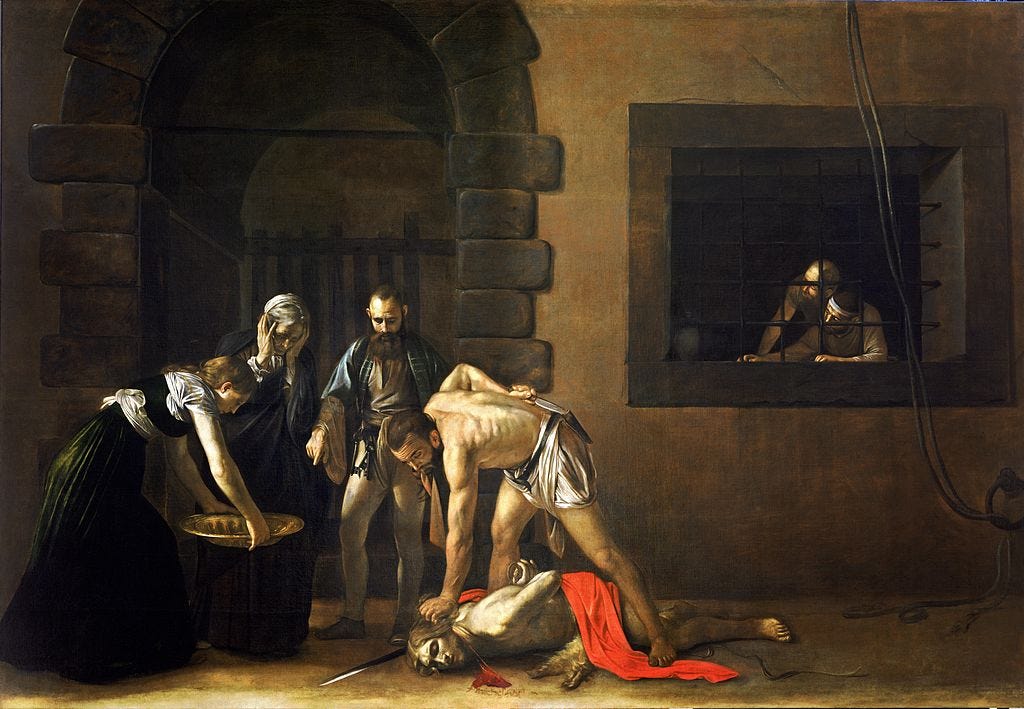
The story is intentionally sordid. Herod Antipas, already involved in an unlawful marriage to his brother’s wife (6:18), hosts a birthday feast for the powerful men of Galilee (6:21). When Herodias’s daughter dances and Herod makes a reckless oath, the trap is set. John, whom Herod himself called “a righteous and holy man” (6:20), is beheaded to protect a king’s pride in front of his guests. The only person in the scene with any moral bravery is the one whose head ends up on a platter.
Mark sees this scene through the lens of the Old Testament. John is already shown as the Elijah figure, dressed in camel’s hair and a leather belt, deliberately mirroring the prophet’s description in 2 Kings 1:8, fulfilling the forerunner promise of Malachi 3:1 and 4:5 (Mark 1:2–6). Now Herodias acts as Jezebel to Herod’s Ahab, plotting the prophet’s death who dared to speak against the throne, just as Jezebel threatened Elijah after his confrontation with her household (1 Kgs 19:1–2). The pattern of the persecuted prophet is ancient, and Mark’s first readers would have recognized it immediately. Every empire, in every era, has found ways to silence voices it cannot control.
But the most significant detail appears at the very end. “His disciples came and took his body and laid it in a tomb” (Mark 6:29). Mark uses almost identical language when Joseph of Arimathea takes Jesus’s body and places it in a tomb at the end of the Gospel (15:45–46). The death and burial of John serve as a purposeful preview of Jesus’ passion. A weak ruler, manipulated by others, kills a righteous man; his followers claim his body; then he is laid in a tomb. Mark establishes a pattern that Jesus later fulfills.
For the community reading this Gospel under the shadow of Roman imperial hostility, the message would have hit close to home. To be sent out as a disciple of Jesus Christ means entering a world that has always known how to silence prophets. John’s faithfulness cost him everything, and Jesus’s faithfulness will cost him the same. Yet Mark frames all of this within the story of the Twelve being sent out and returning (Mark 6:30). The mission continues. The disciples come back. The work does not end with the prophet’s death because the One who sent them is greater than any Herod. What makes this dark story ultimately bearable—and truly subversive—is that Mark’s readers already know that the tomb is never the final word.