

Liar, Lunatic, or Lord (Feb. 24, 2026)
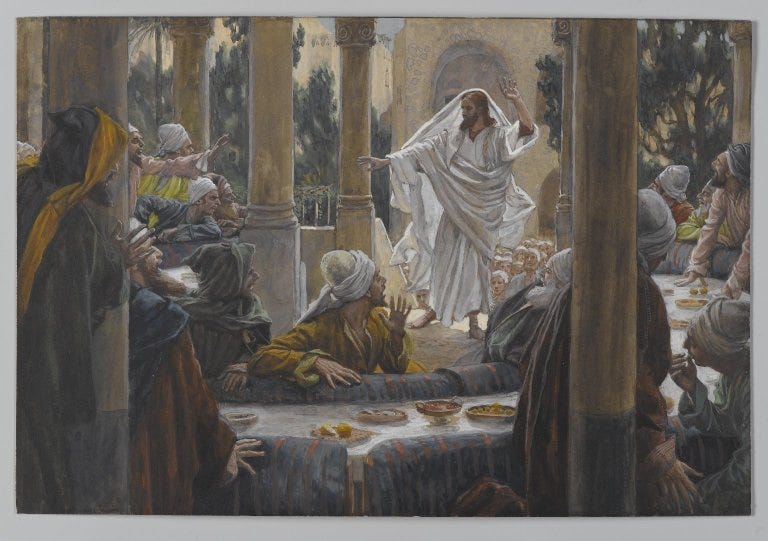
One of Mark’s favorite literary techniques is called intercalation — or, more memorably, “sandwiching.” He begins one story, interrupts it with another, and then returns to finish the first, inviting the reader to interpret the two in light of each other. Mark 3:20–35 is a textbook example. The passage opens with Jesus’s family coming to seize him, convinced he has lost his mind. Mark then pivots to a confrontation with scribes who have traveled all the way from Jerusalem. Then he returns to the family. The sandwich is intentional, and the theme holding it together is rejection.
The two groups reject Jesus in different ways. His family concludes he has gone mad.
“He is out of his mind” (Mark 3:21).
The scribes reach a different but equally damning verdict:
“He is possessed by Beelzebul, and by the prince of demons he casts out the demons” (Mark 3:22).
C. S. Lewis famously argued that these are the only live options for someone who says the kinds of things Jesus said. You cannot call someone merely a good moral teacher when they speak and behave like Jesus. According to Lewis, he is either a liar, a lunatic, or the Lord. Mark’s sandwich presents us with people who have chosen the first two options.
Jesus’s reply to the scribes exposes the incoherence of their charge. A kingdom divided against itself cannot stand; Satan would hardly be in the business of casting out his own (Mark 3:23–26). The real explanation is simpler and more alarming: someone has entered the strong man’s house and bound him (Mark 3:27). The exorcisms are not evidence of demonic collusion — they are evidence of conquest, specifically the New Exodus conquest. To look at that conquest and call it the work of Satan is the unforgivable sin. It is not a moment of doubt or confusion. It is a heart so hardened that it can no longer distinguish the work of God from the work of the devil (Mark 3:28–30).
Then Mark returns to the family waiting outside. Jesus does not go to them. Instead, looking at those seated around him, he redefines the category of family entirely:
“Whoever does the will of God, he is my brother and sister and mother” (Mark 3:35).
These words are not a warm sentiment about community. They are Jesus’s answer to rejection. Those who will not receive him are outside. Those who do the will of God (and thereby recognize that the will of God is being done through Jesus) are inside, gathered around him, constituting a new family defined not by blood but by allegiance.