

The Guest List (2:13–17)
Jesus is beside the sea again, and he is teaching the crowd that has followed him from the synagogue and the sickbeds of the previous chapter. That’s when he sees Levi sitting at the tax booth. Capernaum sat on a customs line. It was a border town where tolls were paid on goods crossing between the territories of Rome’s client rulers. Levi’s job was to collect those tolls, but then Jesus says, “Follow me” (Mark 2:14), and Levi does exactly what Simon, Andrew, James, and John did before him: he gets up and leaves what he was doing behind.
As shocking as that might be, what’s truly startling is what comes next. Levi throws a dinner, and Mark tells us Jesus reclined with him at the table in his house (2:15). Levi filled his table with the only people who would sit with a toll collector: other toll collectors, and the sort of people the scribes of the Pharisees simply called sinners. Jesus took his place among them.
It’s important to remember that the Pharisees were a renewal movement. They drew careful lines around who counted as faithful Israel at a moment when Rome and its collaborators seemed to have the run of the country. From where they stood, “Why does he eat with tax collectors and sinners?” (2:16) was a serious question about what kind of teacher Jesus was, not merely a trap. A rabbi’s table told you who he believed belonged to God’s people.
Jesus answers with a diagnosis.
“Those who are well have no need of a physician, but those who are sick” (2:17).
The saying assumes rather than denies the Pharisees’ sense that something at this table needs mending, but it locates the remedy in proximity, not distance. A physician goes looking for the sick.
“I came not to call the righteous, but sinners” (2:17)
This verse names those Jesus will gather around him, and it should give us pause. Are we like the Pharisees, deciding, often without noticing, who is worthy to sit at our tables and who is not, or are we more like Jesus, associating with all the wrong kinds of people because we know they’re the ones who most need the healing and salvation that only the divine physician can give?
The Bridegroom (2:18–22)
The question put to Jesus is straightforward. John’s disciples fast. The Pharisees’ disciples fast. Why don’t yours? Jesus’ answer must have been surprising to his original audience.
“Can the wedding guests fast while the bridegroom is with them? As long as they have the bridegroom with them, they cannot fast. The days will come when the bridegroom is taken away from them, and then they will fast in that day” (Mark 2:19–20).
Jesus’ answer reorients fasting around a single criterion: his own bodily presence. The guests at a wedding do not fast while the bridegroom is among them, and now the bridegroom has come.
But this assertion is no mere analogy. Jesus is claiming to be the bridegroom Israel had been waiting for. By using this term, Jesus alludes to prophetic tradition in which Yahweh is described as the husband of Israel. Isaiah states the relationship directly:
“For your Maker is your husband, the LORD of hosts is his name” (Isa 54:5).
Later in the same book:
“As the bridegroom rejoices over the bride, so shall your God rejoice over you” (Isa 62:5).
Hosea sees the renewal of the covenant as Israel’s recognition of God in these very terms:
“And in that day, declares the LORD, you will call me ‘My Husband’” (Hos 2:16).
When Jesus calls himself the bridegroom, he takes on the role of Yahweh in this tradition. He doesn't explicitly state the claim. Instead, he embeds it in his words, as Mark does in the opening quote (1:1–3). In those verses, a claim to divine identity is hidden within a combined Old Testament quotation.
The point about the presence of the bridegroom does not make the fasting of the Pharisees’ disciples or John’s invalid or corrupt. Jesus isn’t making a judgment about them in and of themselves. He’s commenting on the redemptive-historical moment. Fasting isn’t problematic, but the bridegroom has arrived, and this is no longer the time to fast. When the new comes, the old must give way.
The two sayings that follow Jesus’ discussion of the bridegroom point in the same direction. No one sews a new patch onto an old cloak; no one pours new wine into old skins. Old practices, like the fasting of the Pharisees’ disciples or John’s, aren’t wrong, but they aren’t suitable containers for the new thing that is happening with the arrival of the bridegroom. This might explain why Luke softens the language here by adding a line about the value of the old (Luke 5:39). Mark has no such softening. What has arrived in Jesus cannot be patched onto what came before.
The temptation is always to try anyway, to accept Jesus on the terms we already understand. We want to fit him into our system, but that’s not how the Gospel works. The bridegroom has arrived, and the old must give way to the new.
The Lord of the Sabbath (2:23–28)
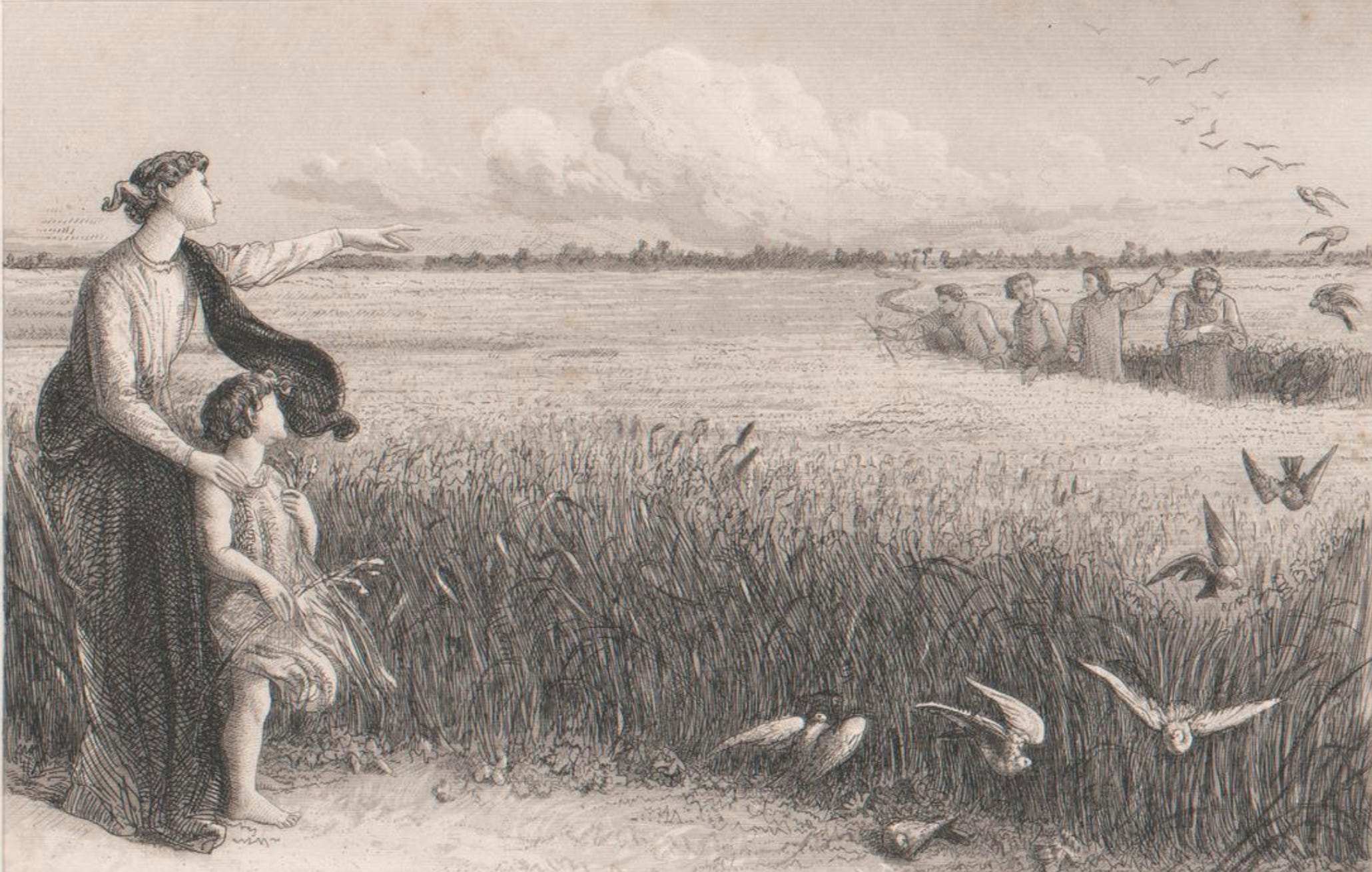
The Sabbath dates back to the beginning of the story. On the seventh day, God rested from all His works, and He invited Adam and all of creation to share in that rest (Gen 2:2–3). The command to honor the Sabbath and keep it holy is part of the Ten Commandments — not as a burden placed on people but as an invitation to enter into the rest that God Himself was already enjoying (Exod 20:8–11; Deut 5:12–15).
By the time of Jesus, the Pharisees had developed an elaborate hedge of laws around that command to make sure it was not broken. But when they saw his disciples plucking heads of grain as they walked through the fields on a Sabbath, they confronted Jesus directly (Mark 2:23–24).
His response first pointed to David, who entered God’s house and ate the bread of the Presence when he and his men were hungry (1 Sam 21:1–6)—bread reserved by the law solely for the priests (Lev 24:5–9). The principle: when people are starving, human needs override the command. Then he drew the conclusion:
“The Sabbath was made for man, not man for the Sabbath. So the Son of Man is lord even of the Sabbath” (Mark 2:27–28).
The Sabbath was created for the benefit of humanity. Humanity was not created for the benefit of the Sabbath. This truth applies to any commandment: the commandment is meant to serve the good of people; people were not created to serve the commandment. This idea should make us question ever treating the rule of law as something sacred while watching people suffer.
But Jesus does not stop there. He goes a step further and says that the Son of Man is lord even of the Sabbath. This passage is only the second time in Mark’s Gospel that Jesus has called himself the Son of Man. The first was earlier in this same chapter:
“that you may know that the Son of Man has authority on earth to forgive sins” (Mark 2:10).
Now the claim expands — the Son of Man has authority even over the Sabbath.
In Dan 7:13–14, the Son of Man appears before the Ancient of Days, to whom is given dominion, glory, and a kingdom, so that all peoples, nations, and languages should serve him. Jesus claims to be this figure. If that is who he is, then his authority goes beyond kingdoms, nations, and languages. It includes forgiving sins and redefining what Sabbath keeping looks like.
The logic is clear: if the Sabbath was made for man and not man for the Sabbath, then the one who truly embodies what it means to be human has authority over what was created for humanity. The author of Hebrews will later explore the full implications of this, arguing that the rest God has always invited his people into is fulfilled not in a day but in a person (Heb 4:1–11). Right now, we are only seeing signposts, but they are pointing us toward something extraordinary.