

Do Not Stop Him (9:49–50)
John comes to Jesus with a complaint disguised as a report.
“Master, we saw someone casting out demons in your name, and we tried to stop him, because he does not follow with us” (9:49).
The man was succeeding and performing the exorcism in Jesus’ name, yet John objects. The man was not one of the Twelve, and that was reason enough to shut him down.
Jesus’ reply is short.
“Do not stop him, for the one who is not against you is for you” (9:50). \
This exact situation had already occurred once before in the wilderness camp of Israel.
Now two men remained in the camp, one named Eldad, and the other named Medad, and the Spirit rested on them. They were among those registered, although they had not gone out to the tent, and they prophesied in the camp. And a young man ran and told Moses, “Eldad and Medad are prophesying in the camp.” And Joshua the son of Nun, the assistant of Moses from his youth, said, “My lord Moses, stop them.” But Moses said to him, “Are you jealous for my sake? Would that all the LORD’s people were prophets, that the LORD would put his Spirit on them!” (Num 11:26–29)
Seventy elders had gone out to the tent of meeting and received the Spirit there, in the place Moses had sanctioned. Eldad and Medad had not gone. They stayed in the camp, and the Spirit rested on them anyway, in a place no one had authorized.
Moses does not defend the boundary Joshua wants defended. He asks Joshua why he is jealous on his behalf, then says the last thing Joshua expects to hear: he wishes the Spirit fell on everyone. Jesus gives a smaller version of the same answer. He does not ask how the man learned to cast out demons in his name, or whether the man will join the Twelve later. He simply refuses to treat someone outside the circle as a threat simply because they are on the outside looking in.
When we hear that God is at work in a church that worships differently than we do, that reads Scripture differently than we do, that speaks a different theological dialect, our first instinct is often to ask whether the work is legitimate before we ask whether it is good. We police the border more readily than we welcome the harvest. The Spirit does not require our permission to rest on whomever the Lord chooses, and we should avoid at all costs any thought that our circle or camp is the only one that matters to God.
Greater Than Elijah (9:51–62)
When Elijah found Elisha, the young man was plowing with twelve yoke of oxen. The prophet tossed his cloak over him and kept walking. Elisha understood the gesture and ran after him with a single request:
“Let me kiss my father and my mother, and then I will follow you.” And [Elijah] said to him, “Go back again, for what have I done to you?” (1 Kgs 19:20)
Elijah granted the delay. Elisha returned, slaughtered his oxen, burned the plow and its gear to cook the meat, fed the people, and only then rose to follow (19:21). The call was real, but it allowed time for a farewell and a meal. Israel’s greatest prophet let his successor look back before moving forward.
This same Elijah just appeared at the Transfiguration, and while he’s not mentioned by name, he continues to have influence over Luke’s narrative. For example, when a Samaritan village refuses to welcome Jesus, James and John ask, “Lord, do you want us to tell fire to come down from heaven and consume them?” (9:54). They are quoting Elijah’s script. Twice, he called fire from the sky on soldiers sent to arrest him (2 Kgs 1:10–12). The disciples think the prophet’s method still applies. Jesus rebukes them and keeps walking.
That contrast sets up the three men who meet Jesus on the road. The first volunteers eagerly, and Jesus tells him that “the Son of Man has nowhere to lay his head” (9:58). The second is called directly and asks to bury his father first, the most sacred obligation in Jewish law, and Jesus answers, “Leave the dead to bury their own dead. But as for you, go and proclaim the kingdom of God” (9:60). The third offers the exact request Elijah once granted:
“I will follow you, Lord, but let me first say farewell to those at my home.” Jesus said to him, “No one who puts his hand to the plow and looks back is fit for the kingdom of God.” (9:61–62)
Elisha asked to kiss his parents, and he was sent back to do so. This man asks the same thing and is told no. The plow imagery is not decorative. Jesus is standing where Elijah stood and giving the opposite answer, because the kingdom he announces is more important and more pressing. The call to follow Jesus that now stands before us is more costly than the one Elijah issued, because the one issuing it is walking ahead of us toward a Roman cross.
Jesus’ Exodus (9:28–36)
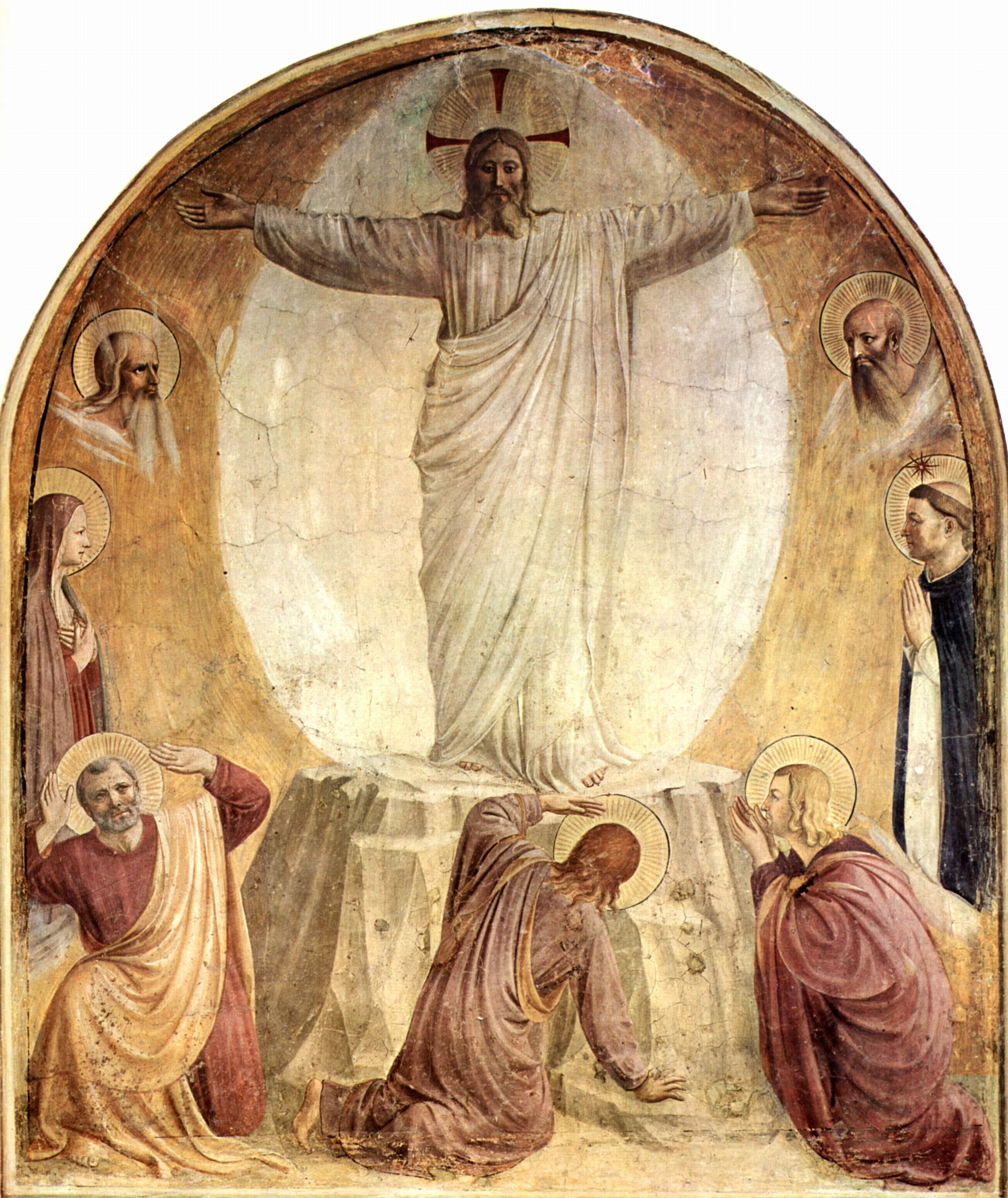
At the Transfiguration, the word Luke chooses for what Moses and Elijah discussed with Jesus is not accidental. They “spoke of his departure, which he was about to accomplish at Jerusalem” (Luke 9:31). That word translated as “departure” is ἔξοδος (exodos), the title of the second book of the Torah. It carries the full significance of Israel’s pivotal moment: the liberation from Egypt, the crossing of the sea, and the journey toward the land of promise.
Luke has been building toward this word from the opening chapters. In the Benedictus, Zechariah praised God for raising up “a horn of salvation” who would deliver Israel from her enemies and guide her feet “into the way of peace” (1:68–79), language soaked in exodus memory. At the Jordan, Luke extended the quotation from Isa 40 further than any other Synoptic, pushing to verse 5: “all flesh shall see the salvation of God” (3:6). The great new exodus of Deutero-Isaiah, in which Yahweh leads a second procession through the wilderness, had been on Luke’s horizon from the beginning. What was anticipated in prophecy and announced in birth narratives now has a name and a destination: ἔξοδος and Jerusalem.
The verb Luke pairs with the noun sharpens the point even further. Jesus’s exodus is something he was about to “accomplish” (πληρόω, plēroō), the same word used elsewhere for the “fulfillment” of Scripture (4:21). The pairing is worth pausing over. His death is not an interruption of Israel’s story but its completion. Moses and Elijah understand this. Moses, who led the first exodus out of Egypt, appears here as a witness to the one that will surpass it. Elijah stands alongside him as the prophet whose return was promised before the day of the Lord (Mal 4:5–6), the one who had announced what was now arriving.
The disciples, meanwhile, ‘were heavy with sleep’ (9:32). The detail is unique to Luke and will reappear at Gethsemane (22:45), where the disciples again sleep while Jesus faces the very suffering Moses and Elijah described on the mountain. In both scenes, the ones closest to Jesus are present but unaware. They are being led into an exodus they do not yet understand.
Their understanding begins to take shape at 9:51, when Jesus “set his face to go to Jerusalem.” The travel narrative that unfolds from that verse to 19:44 functions as the new exodus march: a long, deliberate journey through the land, led by the one Moses and Elijah discussed on the mountain. The disciples trailing behind are not merely followers; they are a people being led out.
The voice from the cloud identifies who is leading them: “This is my Son, my Chosen One; listen to him” (9:35). Luke’s title, ἐκλελεγμένος (eklelegmenos, “Chosen One”), echoes the servant of Isa 42:1. The one leading this new exodus will succeed not through military conquest but through the suffering that Moses and Elijah predicted on the mountain. He leads his people out not by defeating enemies but by bearing their sin and passing through death himself.