

Out of Their Means (March 16, 2026)
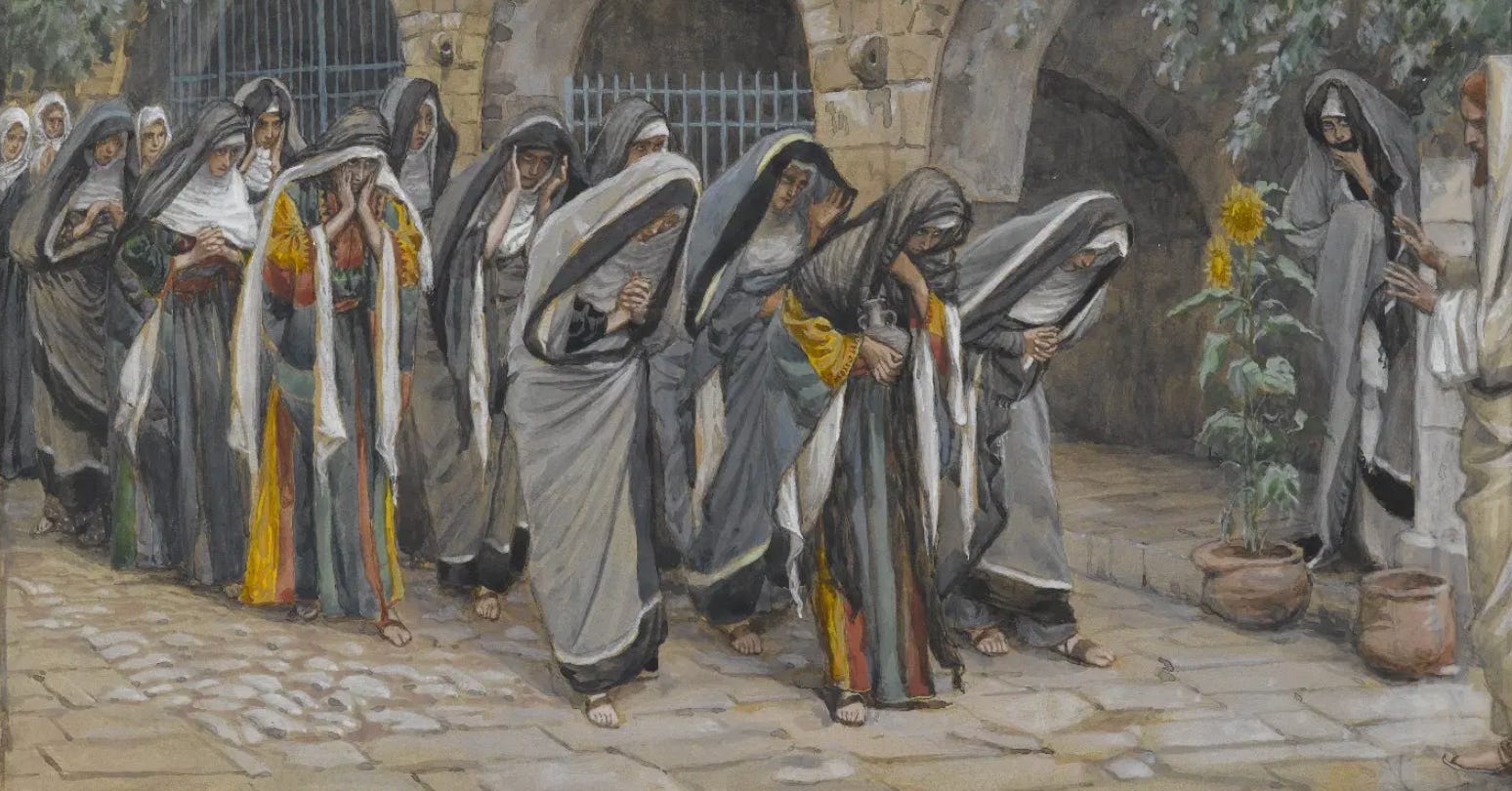
Luke’s travel notices are generally brief, but 8:1–3, which appears only in Luke, is anything but minor. These three verses introduce a group of women traveling with Jesus and the Twelve through Galilee as he proclaims “the good news of the kingdom of God” (Luke 8:1). Luke highlights three of them: Mary Magdalene, Joanna, and Susanna. The naming is significant. In a Gospel filled with unnamed figures, to be named means to be made visible.
Joanna merits a second examination. Luke identifies her as the wife of Chuza, the ἐπίτροπος of Herod’s household (8:3), a term referring to Herod’s estate manager—an influential position close to power. Joanna is connected, at least through marriage, to the court of Herod Antipas, the Herod who imprisoned John the Baptist (9:7–9) and whose court would later ridicule Jesus before his execution (23:11). Her public association with Jesus’s traveling group was not an incidental affiliation. By any standard, it was a costly one.
Luke tells us these women διηκόνουν αὐτοῖς ἐκ τῶν ὑπαρχόντων αὐταῖς, “provided for them out of their means” (8:3). The phrase “out of their means” clearly shows that these women had their own financial resources they used for Jesus’s mission. What would it cost to redirect such resources toward a figure the palace saw as a threat?
The placement of these verses is deliberate. Luke places these women right before the Parable of the Sower. The parable asks what kind of soil receives the word and produces fruit. These women already offer a partial answer: allegiances shifted, resources redirected, social standing put at risk.
They also remain visible. Luke recalls them at the cross, where “the women who had followed him from Galilee stood at a distance watching these things” (23:49). He remembers them at the tomb, noting they saw where the body was laid (23:55). And at 24:10, Luke names Joanna again, along with Mary Magdalene and others, as among the first to deliver the resurrection news to the apostles. The woman who funded the mission from within Herod’s court becomes a witness to the empty tomb. What kind of soil receives the word like that?