

Blessed Are You (March 15, 2026)
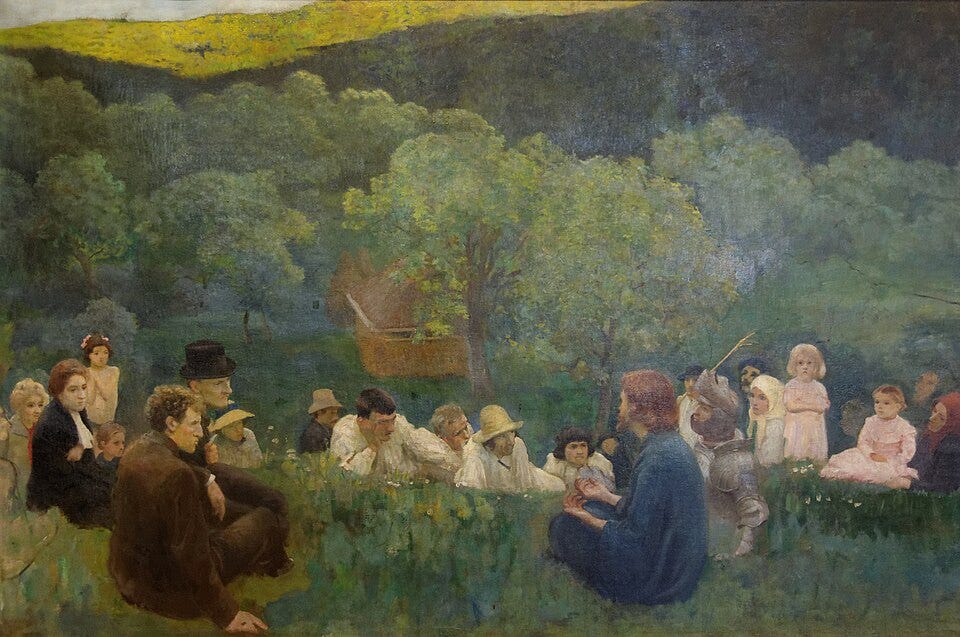
When Jesus begins his Sermon on the Plain, he is not presenting a moral agenda for self-improvement. He looks up toward his disciples, the same people who have just left everything behind to follow him, and declares them blessed (Luke 6:20).
The Greek word is μακάριος (makarios), and it functions more as a statement of status than an invitation. It does not mean “you will become blessed if you develop the right virtues”; it indicates that you are, right now, in a state of divine favor. The people being addressed are the poor, the hungry, those who mourn, and those hated because of the Son of Man (6:20–22).
What makes Luke’s beatitudes unique is their direct address to the second person. Matthew’s version refers to “the poor in spirit” in the third person (Matt 5:3); Luke’s Jesus looks at his disciples and says, “blessed are you who are poor” (Luke 6:20). The poverty highlighted here is social and economic first, then spiritual. Luke has been leading up to this moment since the Magnificat, where Mary sings of a God who fills the hungry with good things and sends the rich away empty (1:52–53).
The four woes that follow mirror the beatitudes with striking accuracy. Wealthy, joyful, cheerful, and well-regarded: these woes are for those who, by every objective measure, seem to be thriving (6:24–26). But the crucial word in verse 24 is the verb ἀπέχετε (apechete), a business term found on ancient papyrus receipts to indicate an account paid in full. The wealthy have already received their comfort. Their account is settled, and there is nothing more to draw from.
The woes are not curses. The Greek interjection οὐαί (ouai) aligns more with “alas” than with a statement of condemnation. Jesus is not delivering damnation but rather announcing an upcoming reversal that will reveal how fragile apparent prosperity truly is. The kingdom of God, as Luke describes it from the very first chapters, is not a slightly improved version of the current order. It is a true inversion of it.
The core question isn’t “have I internalized the right spiritual dispositions?” but something more uncomfortable: which side of the reversal am I on, and why does that question make me uneasy?