

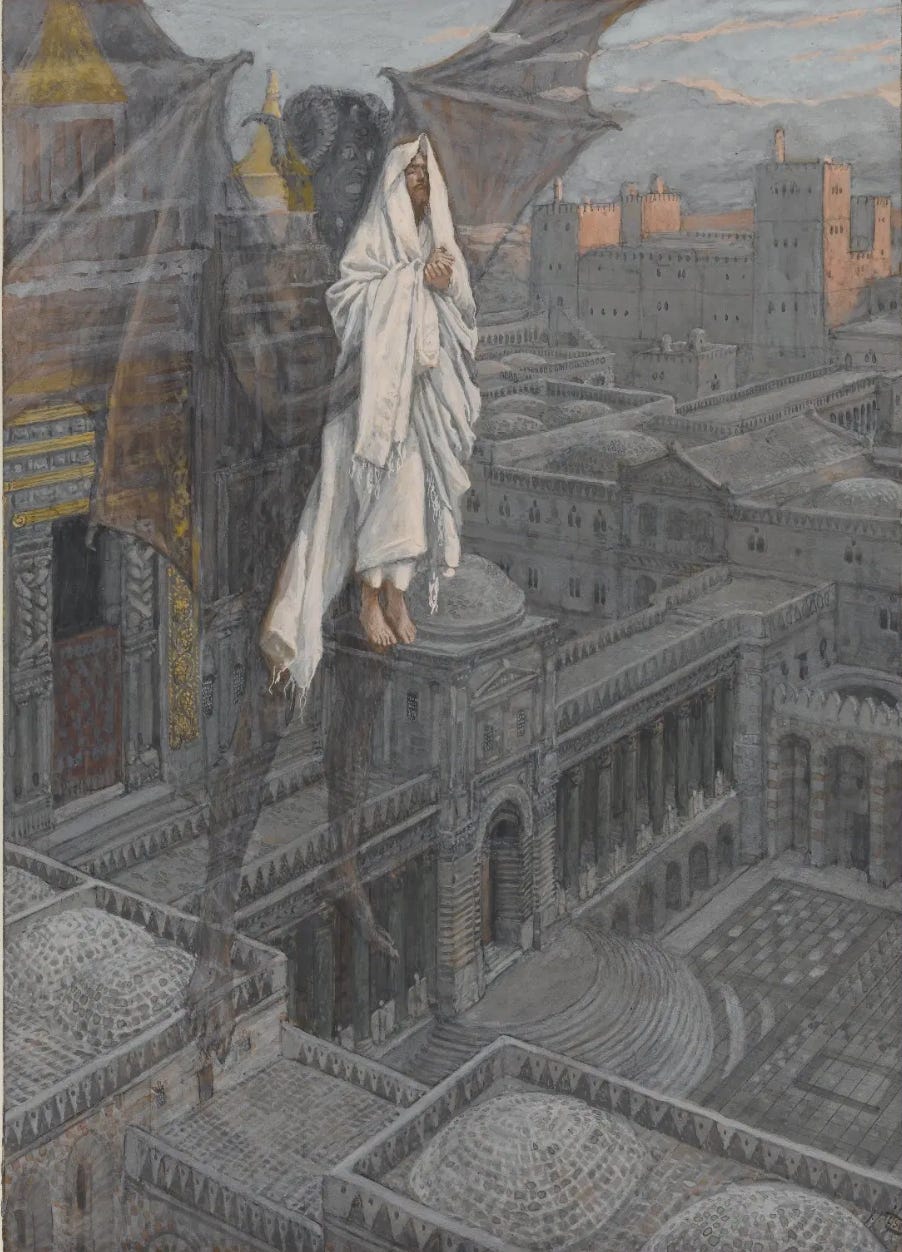
The Second Son of God (March 12, 2026)
When the heavenly voice speaks over the Jordan — “You are my beloved Son; with you I am well pleased” (Luke 3:22) — it is the most exalted declaration in the Gospel so far. What follows is the most earthly descent possible. Luke’s genealogy does not ascend toward royalty; it descends downward, generation by generation, past Abraham and Noah, until it reaches the beginning of the human story: “the son of Adam, the son of God” (3:38).
Matthew arranges his genealogy around key moments in Israel’s history: Abraham, David, the Exile, and the Messiah (Matt 1:1–17). The three sets of fourteen generations are more than just chronological; they are theological, illustrating the themes of covenant, catastrophe, and restoration. Luke’s genealogy, in contrast, has no such structure. It makes no stop at David or dwell on the Exile. It skips past Abraham entirely and continues — through Noah, the antediluvian patriarchs, all the way to Adam.
Whereas Matthew emphasizes Israel’s story, Luke focuses on the human story. This universal scope has already been indicated: when Luke quotes Isa 40 and adds “all flesh shall see the salvation of God” (Luke 3:6), he is foreshadowing what the genealogy will confirm. The kingship of Jesus declared at the Jordan by the heavenly voice is not meant for one nation reclaiming its throne; it belongs to all people who trace their line back to the first man.
But the genealogy also presents a problem. Adam was the “son of God” and failed. The question Luke raises, and which the temptation narrative immediately answers, is whether this Son of God will follow the same path as his ancestors before him.
The same Spirit that descended at the Jordan drives Jesus into the wilderness (4:1), linking the declaration of sonship with the testing of sonship in a single continuous movement. The first Son of God did not pass the test. He failed. The second Son of God will not fail.
The genealogy traces an important title of Jesus back to its first bearer and asks what went wrong. The temptation shows what has now, at last, gone right.
As John is rebuking and calling the crowds to repentance, he says this:
10 And the crowds asked him, “What then shall we do?” 11 And he answered them, “Whoever has two tunics[b] is to share with him who has none, and whoever has food is to do likewise.” 12 Tax collectors also came to be baptized and said to him, “Teacher, what shall we do?” 13 And he said to them, “Collect no more than you are authorized to do.” 14 Soldiers also asked him, “And we, what shall we do?” And he said to them, “Do not extort money from anyone by threats or by false accusation, and be content with your wages.”
All I could think was how many today would say John was a socialist, or communist, or “woke,” because he called people to give sacrificially. Luke goes on to say in vs 18 “So with many other exhortations he preached GOOD NEWS to the people.” Our call to the cruciform life is good news. — it is in giving up that we gain life.