

Failure and Forgiveness (22:31–34)
Jesus doubles Simon’s name, and across Luke’s two volumes this happens only three times: to Martha, when she is anxious about too many things (10:41), to Simon here, and later to Saul, when the risen Christ finally corners him on the Damascus road (Acts 9:4). The repetition emphasizes the significance of this moment.
Jesus tells Simon that Satan “demanded to have you” (22:31). The pronoun “you” is plural in Greek and refers to everyone reclining at the table. The verb suggests a formal claim brought before a court rather than a casual request. The same dynamic stands behind Job’s suffering, where the accuser first has to secure permission before he can touch anything that belongs to God (Job 1:12; 2:6). Satan asks for the whole company the way he once asked for Job, and gets what he asks for: permission to “sift you like wheat,” the violent shaking that separates true grain from everything blown away with it.
Then Jesus turns to Peter alone, and the pronoun narrows from plural to singular, a shift the Greek marks four separate times in one sentence. Satan’s demand reached everyone at the table. Jesus’s prayer is for one man specifically, that his faith would not fail because this man has a job waiting for him after his own failure: “strengthen your brothers” (22:32).
Peter hears none of this as a warning; he hears it as an insult to his loyalty. He answers that he is ready to follow Jesus to prison and to death (22:33). Jesus does not argue with the sentiment. He tells him plainly what will actually happen: before the rooster crows, Peter will deny three times that he knows him (22:34). Peter genuinely loves Jesus; he is only wrong about what that love can currently survive under pressure.
There is something encouraging about Jesus’ awareness of Peter’s impending failure. Judas will betray Jesus. Peter will deny him. One of them will be consumed with guilt. The other “will [turn] again.” Jesus is keenly aware of our shortcomings and failures. But he doesn’t dismiss us or cast us aside. Instead, he warns us, like he warns Peter, and then he offers us the chance to turn back to him again. When we do, we find not only forgiveness, but vocation. Even in the pattern of failure and forgiveness, we find a purpose in Christ.
Jesus and Swords (22:35–38, 47–53)
Isaiah’s servant song ends with a strange line about the servant’s company. He “poured out his soul to death and was numbered with the transgressors” (Isa 53:12). The servant does not merely suffer near criminals. He is counted as one, reckoned into their number by the very people condemning him. The verdict is a miscarriage of justice, but it is also, in a way that Isaiah does not yet explain, the point. The servant’s identification with the guilty is how he bears what belongs to the guilty.
Jesus applies this line directly to himself:
“For I tell you that this Scripture must be fulfilled in me: ‘And he was numbered with the transgressors.’ For what is written about me has its fulfillment” (Luke 22:37).
When Jesus first sent the disciples out earlier in the Gospel, they carried no moneybag, no knapsack, no sandals, and lacked nothing (22:35; cf. 10:4). Now he reverses the instruction. Take a moneybag. Take a knapsack. Sell your cloak if you must, but get a sword (22:36). They find two:
And they said, “Look, Lord, here are two swords.” And he said to them, “It is enough” (22:38).
Jesus is not equipping an armed resistance, nor is he advocating for his disciples to arm themselves. He is manufacturing the evidence for his own arrest. The Roman Empire would barely notice a band of unarmed Galileans, but the same people brandishing swords would certainly get their attention. Isaiah’s line will not fulfill itself; it needs a sword in someone’s hand when the crowd arrives.
One of the two swords shows up exactly when it is needed. In the garden, one of the disciples strikes the high priest’s servant and cuts off his ear (22:49-50). Jesus stops what’s happening (“No more of this!” )and heals the wound. The weapons were for theater, not actual use (22:51). Only Luke records this healing. Jesus wants the sword seen, not swung. Then he turns to the chief priests, the temple officers, and the elders who have come for him and names what he has arranged.
“Have you come out as against a robber, with swords and clubs?” (22:52).
The question is confirmation. Jesus is standing before the charge he built, and he has made certain it costs no one anything real but him.
Jesus does not tell his disciples to arm themselves in case their enemies come to harm them. In fact, when they try to do that, he tells them to stop. Instead, he tells them to bring swords so that he would be “numbered with the transgressors.”
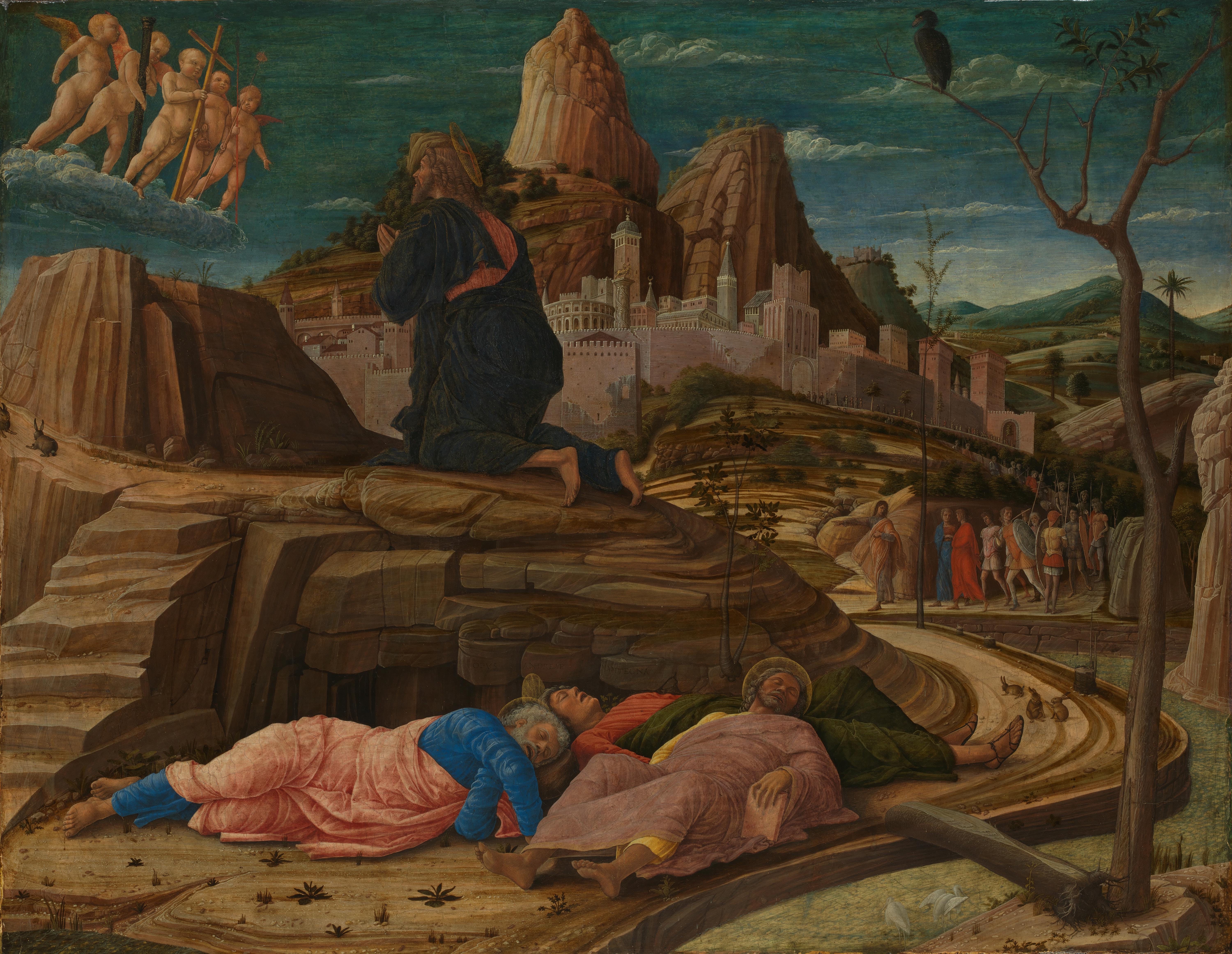
Not My Will (Luke 22:39–46)
When the devil finished tempting Jesus in the wilderness, Luke adds a detail that the other Synoptics omit. He writes that the devil departed from Jesus “until an opportune time” (Luke 4:13). The reader is meant to sense that phrase hanging over the rest of the Gospel. By Luke 22, the opportune time seems to have arrived. Satan enters Judas (22:3), and as Jesus is arrested, he names what is closing in: “this is your hour, and the power of darkness” (22:53). Gethsemane sits between the devil and darkness.
Jesus goes to the Mount of Olives, as was his habit, and instructs his disciples before withdrawing: “Pray that you may not enter into temptation” (22:40). The word is πειρασμός, the same term used for the location of the wilderness trial by the devil in 4:2. Luke further links the two scenes in case the bracket wasn’t clear already. Then Jesus kneels and prays.
Father, if you are willing, remove this cup from me. Nevertheless, not my will, but yours, be done (Luke 22:42).
The cup is not a vague metaphor. In Jeremiah, the Lord commands the prophet to take “this cup of the wine of wrath” and make the nations drink it (Jer 25:15–17). Isaiah reaches for the same image, referring to “the bowl of staggering” that Jerusalem has drunk to the dregs (Isa 51:17). The cup in Gethsemane is that cup, the cup of divine judgment. Jesus understands that it is the Father’s will for him to drink that cup in the place of others.
What follows is unique to Luke. An angel appears to strengthen him, and his sweat falls like drops of blood (22:43–44). The detail is not meant merely to describe physical distress. Something is genuinely being contested, and the contest is costly enough to require heavenly help.
The disciples, meanwhile, are found sleeping. Luke alone specifies the reason: it is from sorrow (22:45). The note reflects Luke’s sympathy toward them, but it does not change the fact that Jesus had asked them to pray and they had not.
He wakes them with the same instruction he gave at the start: “Rise and pray that you may not enter into temptation” (22:46). The framing is intentional. The disciples are about to face their own trial, and the answer to that trial, as it is with Jesus, is prayerful submission to the Father.
The wilderness temptation concluded with Jesus trusting the Father above every alternative the devil presented. Gethsemane ends the same way. The opportune moment came, but Jesus responded with prayer and submission.