

The Cost of Consolation (March 11, 2026)
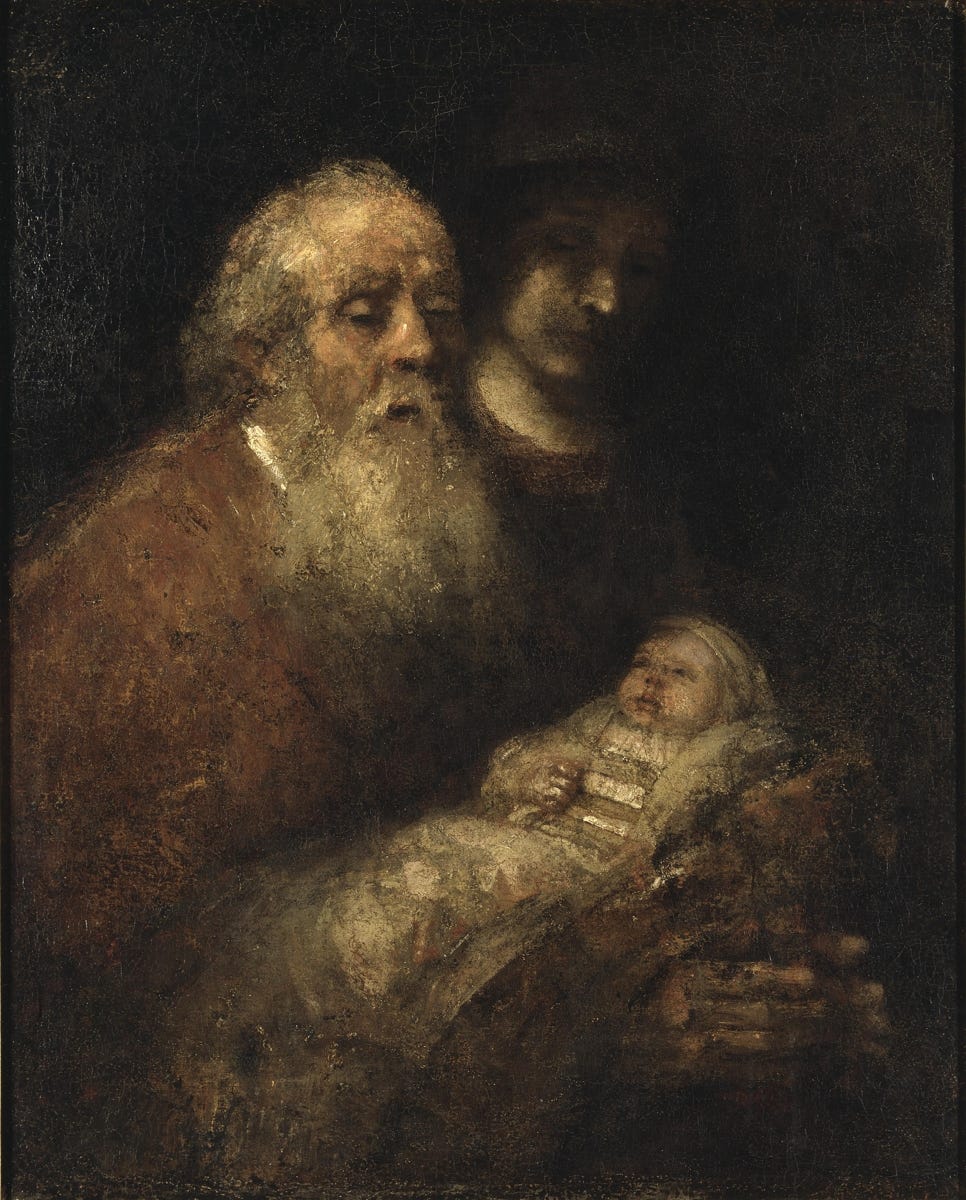
When Luke introduces Simeon, he describes him as a man waiting for “the consolation of Israel” (Luke 2:25). Search the ESV for that exact phrase, and you’ll find no match, not because there is no Old Testament background for what Simeon says but because the translation cuts the verbal connection to its OT source. The Greek word that the ESV translates as “consolation” is παράκλησις (paraklēsis), the noun form of the verb παρακαλέω (parakaleō), which opens Isaiah 40 in the Greek translation.
Comfort, comfort my people, says your God (Isa 40:1).
The allusion is clear. Simeon awaits the fulfillment of the Isaianic New Exodus, the time when God will finally declare that Jerusalem’s warfare has ended, that her iniquity is pardoned, and that he is returning to his people.
Simeon is waiting for exactly what Mark announces at the start of his Gospel. Mark begins by quoting Isa 40:3, the same passage that comes after the message of comfort to the people. This quotation (along with Mal 3:1) serves as the main framework for everything Jesus is about to do and say in Mark’s Gospel. This same New Exodus theme appears again, this time in the opening chapters of Luke’s Gospel.
Simeon is part of the faithful remnant for whom Isaiah’s announcement was made: the one who has been waiting, recognizes when the moment arrives, and can finally depart in peace because the word has been fulfilled.
Luke wants his readers to keep the entire Isaianic context (chs. 40–55) in mind as this old man takes an infant into his arms. Simeon’s response, the Nunc Dimittis, draws from the Servant Songs at the heart of Isaiah.
“A light for revelation to the Gentiles, and for glory to your people Israel” (Luke 2:32) echoes Isaiah’s portrait of the Servant as “a light for the nations” (Isa 42:6; 49:6)—the one through whom “the LORD has bared his holy arm before the eyes of all the nations” (Isa 52:10). Before Jesus has spoken a single word, Simeon identifies him as Isaiah’s Servant.
But Simeon is not finished. After singing about light and glory, he turns to Mary and says something shocking:
Behold, this child is appointed for the fall and rising of many in Israel, and for a sign that is opposed (and a sword will pierce through your own soul also), so that thoughts from many hearts may be revealed (Luke 2:34–35).
Simeon already understands what the Servant Songs reveal — that the consolation of Israel will not come easily. The comfort described in Isa 40 is only shown through the Servant’s suffering in the following chapters. It entered the world through a cross, and Simeon knew the price to be paid before anyone else dared to say it. So, he returned the consolation of Israel to Mary’s arms and explained what it would cost her to be his mother.
Thank you, Deidre.
The picture is awesome.
https://external-content.duckduckgo.com/iu/?u=https%3A%2F%2Ftse1.mm.bing.net%2Fth%2Fid%2FOIP.2JVns4CnoyWi0Zh2nfFtFAHaJn%3Fpid%3DApi&f=1&ipt=67833bc157c6e34e8863fa046e199afb71f3e11d361b1e0e96c0137aab2646dd
Am hoping that image comes through. I have a print of this piece called “Simeon’s Moment” in my home. I was so struck by the joy and devastation of Simeon’s holding the Christ child in the fulfillment of God’s promise that Simeon would live to see Israel’s salvation!
The work is fabulous in that we do not see the face of Jesus — which was intentional so that every person viewing this piece could relate to Jesus being for all people. The cross is superimposed upon the painting with a map of the world as the background.
I imagine Simeon’s moment was very akin to this artist’s rendition and marvel at how he captured the intimacy, longing, and beauty of the moment