

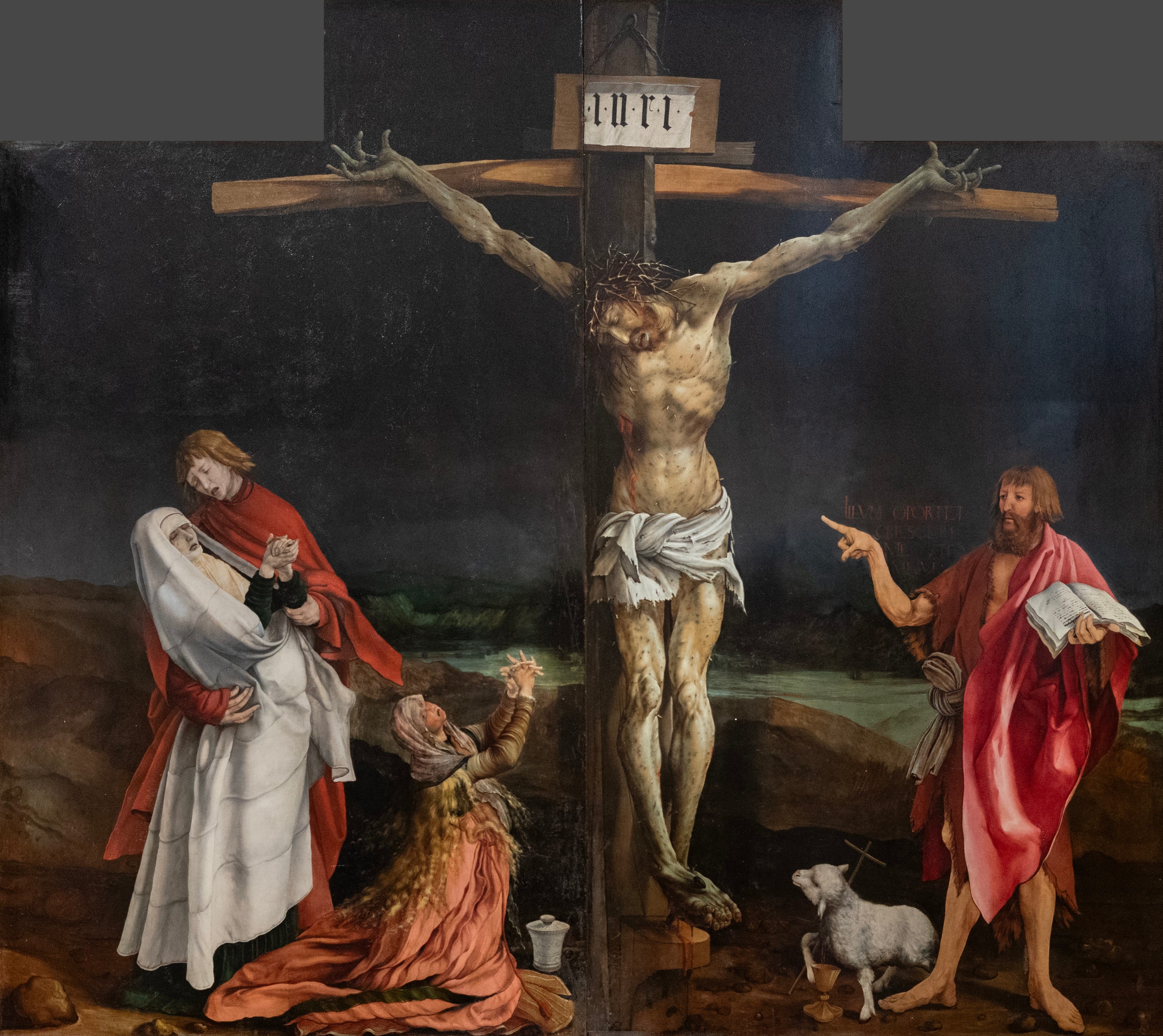
The Unblemished King (19:12-16)
John chooses his words carefully, and king is one of them. The title appears four times across the first seventeen chapters of this gospel. Across chapters 18 and 19, it appears eleven times. By the time Pilate sits down on the judgment seat in John 19:13, the whole scene has become an argument about which king Judea will have.
That argument had already been decided once, a few verses earlier. Offered one prisoner to be released at the Passover, the crowd asked for Barabbas, a man John calls simply a λῃστής (lēstēs), rendered “robber” in our English Bibles (John 18:40). Mark’s parallel account is more specific: Barabbas had committed murder in an insurrection (Mark 15:7). His name itself carries an irony worth noticing. Bar is Aramaic for “son,” abba for “father.” By name, Barabbas is the son of the father. The crowd was offered the Father’s true Son and a violent man who merely carried the title, and they chose the imposter.
So when the chief priests warn Pilate that releasing Jesus would make him no friend of Caesar (19:12), they are finishing what they had already started. Pilate tries one last maneuver and brings Jesus out. John locates the moment precisely: it is the day of Preparation of the Passover, about the sixth hour (19:14), the hour at which the Preparation Day’s lambs were about to be slaughtered in the temple across the city, lambs the law required to be “without blemish” (Exod 12:5). Pilate had already rendered his own verdict on the man standing in front of him: “I find no guilt in him” (18:38). He meant it as an acquittal. John lets it stand as a verdict on which lamb will actually die this Passover.
“Behold your King!” Pilate says (19:14). The chief priests, men who had spent their lives at the altar reading the prophets who promised that Israel’s God would return to rule his own people, answer him directly: “We have no king but Caesar” (19:15). It is possible to serve at that altar an entire life and still choose Caesar the moment the true king stands in front of you. The fake son of the father goes free. The true Son goes to the cross. The people choose Caesar as their king rather than God, and Pilate, who asked “what is truth” only a few verses earlier (18:38), delivers the true king to be crucified, but only after he had declared him spotless.
Psalm 22 and the Crucifixion (19:23–30)
John’s intention (and he’s not alone in this) is to show that Jesus’ death happened “in accordance with the Scriptures” (1 Cor 15:3), to borrow a phrase from Paul. This Johannine purpose gives us one of the crucifixion’s more surprising moments.
After Jesus is crucified, the soldiers divide his garments into four parts, “one part for each soldier” (John 19:23). But they don’t know what to do with his tunic, since it is seamless and more valuable if it is still intact. So, instead of dividing the tunic like they did the rest of his garments, the soldiers cast lots for it.
John writes of this seemingly meaningless moment (compared to what’s happening on the cross):
This was to fulfill the Scripture which says, “They divided my garments among them, and for my clothing they cast lots” (19:24, quoting Ps 22:18).
One of the fascinating parts of this quotation is that Psalm 22 is also featured in the crucifixion in Matthew and Mark, both of which include Jesus saying, “My God, my God, why have you forsaken me” (Matt 27:46; Mark 15:34), a direct quote of the first verse of Psalm 22. But John doesn’t include this saying from the cross, which is particularly interesting if we assume that he is aware of the Synoptic Gospels, although this is not certain. However, all four Gospels mention the casting of lots for Jesus’ clothing, but only John specifically portrays it as a fulfillment of Psalm 22.
All the Gospels seem convinced that Psalm 22 is relevant to the crucifixion, but they all point to different parts of the Psalm. Matthew and Mark include the cry of dereliction mentioned above. Luke has the mocking of the righteous sufferer (23:35-39), which clearly echoes Ps 22:7–8, and Jesus’s final words on the cross in Luke 23:46 are likely an allusion to Ps 22:5.
So what about Jesus’ last words in John? In John, Jesus says, “It is finished” (19:30) right before he dies, and John doesn’t attach a scriptural citation formula to these words. But many have seen an allusion here as well. Psalm 22 begins with the sufferer feeling abandoned, yet it ends with a proclamation of God's righteousness addressed to all the world.
Posterity shall serve him; it shall be told of the Lord to the coming generation; they shall come and proclaim his righteousness to a people yet unborn, that he has done it (Ps 22:30–31).
In fact, in the Greek translation, it says ἐποίησεν ὁ κύριος, “the Lord has done it” (LXX Ps 21:31).
The cross was the manifestation of the righteousness of God in the world. God had been faithful to his promise to bless the whole world through the offspring of Abraham, even at the cost of the life of his own son. And Psalm 22 was clearly important for the early Christians’ understanding of the crucifixion, and even for Jesus’ own understanding of what was happening. I am inclined to think that these last words, “it is finished,” are a direct allusion (maybe even a quotation) of the last words of Psalm 22. The Lord has been faithful to his promises. He has redeemed the suffering of the righteous. The Lord has done it. On the cross, that work is finished.
The Bones That Were Not Broken (19:31–37)
The soldiers came to break Jesus’ legs. The decision was practical. Death by crucifixion could take days, and with the Sabbath approaching and this Passover being a high day (19:31), they moved down the row. The two crucified beside Jesus had their legs broken, but when they reached Jesus, he was already dead. They didn’t break his bones.
John tells his readers exactly what Scripture this fulfills:
“For these things took place that the Scripture might be fulfilled: ‘Not one of his bones will be broken’” (John 19:36).
The text behind this citation is Exodus 12:46, part of the Passover legislation:
“It shall be eaten in one house; you shall not take any of the flesh outside the house, and you shall not break any of its bones” (Exod 12:46).
The Passover lamb was a carefully bound sacrificial object. Its integrity mattered. The ritual was incomplete if the bones were shattered.
A previous post noted that John places the crucifixion on the Day of Preparation, the afternoon when the temple lambs were being slaughtered across Jerusalem. The Baptist’s announcement framed everything from the beginning:
“Behold, the Lamb of God, who takes away the sin of the world” (John 1:29).
The identification of Jesus as the Passover lamb has been in place since chapter one. What the soldiers do at the end of chapter nineteen is complete the identification at the level of legislation. They unknowingly keep the Passover law. This execution detail, without the soldiers knowing it, completes the rite.
But John adds a second citation, and the second one carries the heavier freight:
“And again another Scripture says, ‘They will look on him whom they have pierced’” (John 19:37)
The quote is from Zechariah 12:10. Its context is a scene of corporate mourning, organized by clans and families, exhaustive and total. And what follows the mourning, at 13:1, is a fountain opened for the house of David and the inhabitants of Jerusalem, to cleanse them from sin and uncleanness. The structure in Zechariah is sequential: piercing, then mourning, then the fountain that cleanses.
John 19:34 declares what came from the side of the pierced one: blood and water. The blood and the water are not a physiological observation about postmortem fluid separation. They are what Zechariah promised would be opened when they looked on the one they had pierced. The spear, in John’s account, opens the fountain.
Two OT texts converge at this single moment. The Passover lamb of Exodus 12 and the pierced shepherd of Zechariah 12 are the same person. The unbroken bones confirm the lamb. The water and blood confirm the fountain that Zechariah predicted.
John adds an unusual note: the eyewitness saw it and has borne witness, so that the reader may believe (19:35). The bones were intact. The blood and water were real. The Scripture was fulfilled. The Passover sacrifice was not interrupted by the Roman soldiers. They completed it.
The Hyssop and the Lamb (19:28–30) – Good Friday
Every Passover, Israel rehearsed the same story. A lamb was slaughtered; its blood was applied to the doorposts with a branch of hyssop; the destroyer passed over; a people were freed (Exod 12:22). The hyssop was a simple, shrubby plant, but it carried the blood that meant life. On a Friday afternoon in Jerusalem, it appears again.
John carefully marks the moment. Jesus, knowing “that all was now finished” (John 19:28), speaks: “I thirst.” John adds that he said this “to fulfill the Scripture” — a signal to the reader that something specific is in view. The psalm behind the words is not hard to identify. The righteous sufferer of Ps 69 cries out: “for my thirst they gave me sour wine to drink” (Ps 69:21). Jesus does not improvise at the cross. He inhabits the script that Scripture prepared for him, right down to his final thirst.
A jar of sour wine sits nearby. Someone raises a sponge soaked in it on a branch of hyssop (ὑσσώπῳ) and holds it to his lips. The hyssop isn’t just a small detail. John has been connecting the Passover symbols throughout his account of Jesus’ passion: Jesus is crucified on the Day of Preparation, the afternoon when the temple lambs are slaughtered (John 19:14). Now, at the moment of death, the hyssop appears again. The evangelist shows us what is happening. Jesus dies as the true Passover lamb, and what Israel has been practicing for generations reaches its final point.
He drinks the sour wine and says:
“It is finished” (John 19:30).
τετέλεσται is not a cry of defeat. The verb τελέω conveys the sense of a task completed and brought to its destination. Jesus has used this language before. “My food is to do the will of him who sent me and to accomplish his work,” he says at the well (John 4:34). In the Upper Room, John notes that Jesus loved his own “to the end” (John 13:1). In his prayer the night before: “I glorified you on earth, having accomplished the work that you gave me to do” (John 17:4). The cross is not an interruption of that mission. It is the mission, arrived and fulfilled.
The hyssop that once bore Passover blood now touches the lips of the Passover Lamb himself. The psalm that voiced the righteous sufferer finds its final speaker. What Israel rehearsed for centuries, Jesus completes once and for all.
“We have a law!” (19:1–11)
“We have a law!” I hear phrases like this often these days—usually to explain why Christians can’t (or won’t) challenge laws that cause human suffering. After all, we’re supposed to “be subject to governing authorities” (Rom 13:1), right? But does that biblical command really mean “If it’s the law, it’s the law,” and therefore “all good Christians” must comply without question?
The appeal “We have a law!” was often used against Jesus. “We have a law about the Sabbath!” “We have a law about ritual purity!” “We have a law about associating with the wicked!”
Now, that same language is used to condemn Jesus to death.
The Jews answered him, “We have a law, and according to that law he ought to die because he has made himself the Son of God”(John 19:7).
What happens when our laws oppress the innocent and even condemn them to death?1 How are we “good Christians” to respond to such laws? Should we obey? Should we assert Caesar’s right to bear the sword and the Christian’s duty to submit to governing authorities, regardless of the impact on human dignity, flourishing, and life?
And he said to them, “The Sabbath was made for man, not man for the Sabbath” (Mark 2:27).
To insist “We have a law!” while humans suffer and die because of that law is to align with those who condemned Jesus to death. It is to align with Caesar, Pilate, and the empires from this world in opposition to the kingdom of God that Jesus was establishing through his death and resurrection. It is to loudly and clearly declare, when faced with the true King who sacrifices himself so that others might live, “We have no king but Caesar” (John 19:15).
Please note that “innocent” here is in no way defined by compliance with civil laws.
I could barely get through the beginning parts of this chapter where the people appeal to political leadership (rather than God) to get their way to crucify a man they believed was a threat to their way of life. I’m reminded that Gamaliel in the book of Acts tells the Sanhedrin if the followers of Jesus were of God, nothing could stop them!
I found myself disheartened that the Jews told Pilate, “We have no king but Caesar!” because I’m witnessing similar sentiments in our country today.
Your past few daily posts illuminating how John highlights the qualities of the Passover lamb that Jesus fills full are simply excellent. Thank you.